Architectural Shingles vs 3-Tab Shingles: What Homeowners Should Compare
Compare architectural and 3-tab shingles by appearance, product details, installation context, and priorities before discussing options with a Texas roofer.
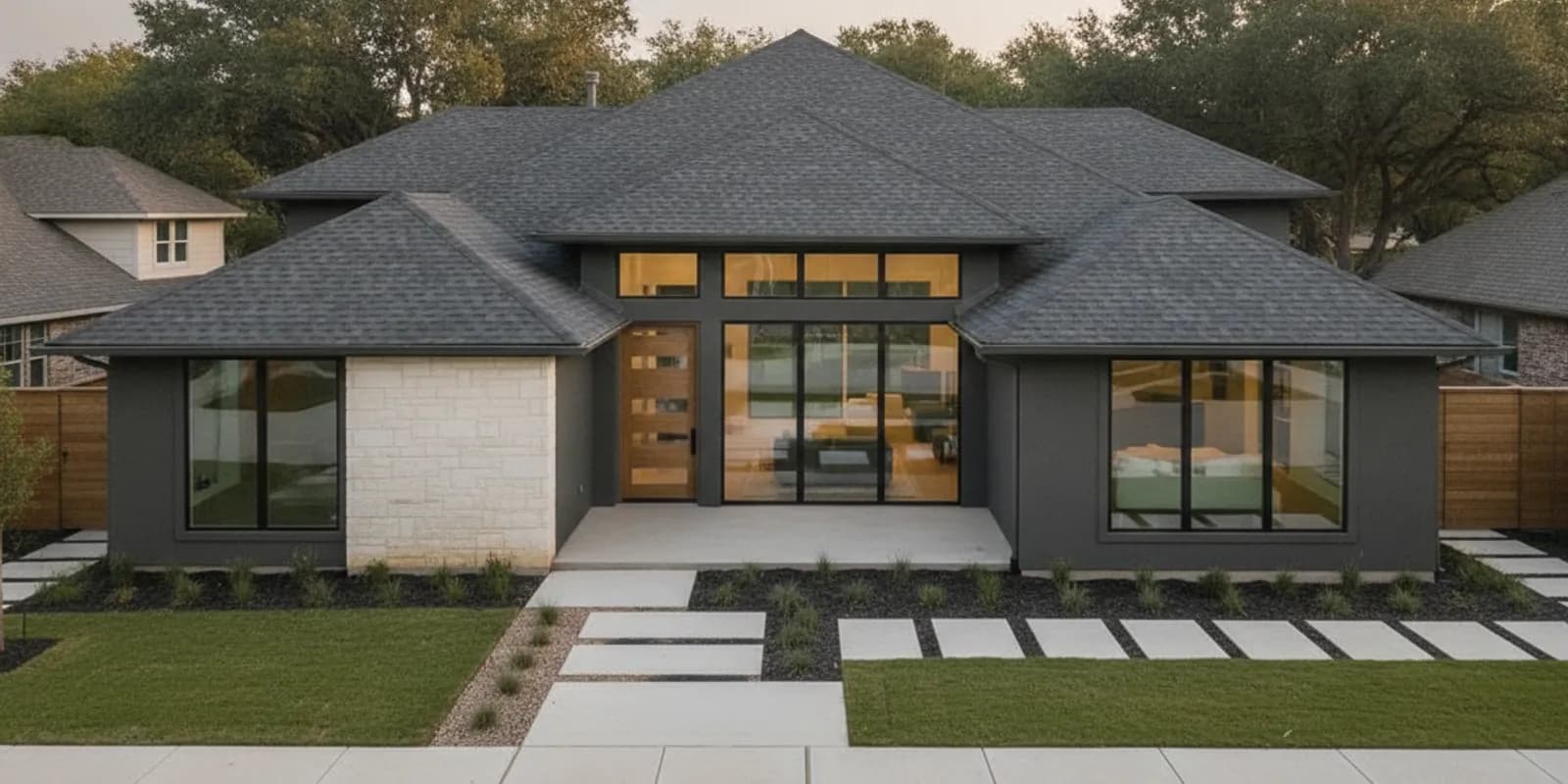
When comparing architectural shingles vs 3 tab shingles, start with more than the roof color. The two asphalt-shingle styles create different roof appearances and can involve different product specifications, installation details, and proposal terms. The right comparison depends on the home, the existing roof, the project scope, and what matters most to you.
For Texas homeowners, particularly those planning a reroof in the Dallas–Fort Worth area, the decision is best made as part of a roof evaluation rather than from a product label alone. A roofer can review the roof and explain which materials are being proposed. This guide outlines the differences to discuss, the questions to ask, and the details worth comparing before you make a decision.
What is the basic difference between architectural and 3-tab shingles?
Both are asphalt shingles, but they are made and arranged differently. A 3-tab shingle has a relatively flat profile and a repeating pattern of cutouts that form three visible tabs across each piece. When installed, those tabs create a regular, more uniform look.
An architectural shingle, also called a dimensional or laminate shingle, has a layered construction and a more varied surface profile. Its pattern can create more visible shadow and dimension across the roof. Products vary, so the precise appearance depends on the selected style, color, and manufacturer.
These descriptions explain the visual and construction distinction, not a promise about service life, wind performance, or warranty coverage. Those details depend on the specific product and its published requirements, the roof assembly, installation, and project conditions. A product category by itself does not tell you everything about a proposed roof.
It also helps to separate three questions that are often blended together in a quick sales conversation. First, what does the shingle look like? Second, what exact product is proposed, and what does its manufacturer documentation say? Third, what work will the contractor perform on this particular roof? A clear decision addresses all three. The category name answers only part of the first question.
How do the two shingle styles look on a home?
Appearance is often the easiest difference to spot. A 3-tab roof usually reads as a flatter, more repeating pattern. An architectural roof tends to have more variation in its surface and a less uniform shadow line. Neither description means one style will suit every house better. Roof pitch, roof size, trim, siding, and the home’s overall design all affect how a shingle color and pattern appear from the street.
Color samples can help, but they do not always show how a complete roof will look. A small sample viewed close up may appear different from the same color spread across a large roof plane. Light, shade, and the direction of the roof slopes can also affect the impression. If appearance is a priority, ask to compare full product images or examples that show the shingle installed across a roof, not only a small color chip.
Think about the whole exterior as you compare. Consider whether you want the roof to blend quietly with the home or stand out as a more textured feature. Look at fixed elements such as brick, stone, siding, gutters, and trim. You do not need to select a roof based on a trend; you do need to be comfortable with how the color and pattern work with materials that are not part of the roofing project.
If two proposals use different shingle styles, compare their appearance separately from their scope and product specifications. A more dimensional look does not automatically mean that a particular product is the right fit for your roof. Likewise, a simpler pattern should not be dismissed without considering the specific material and the project requirements.
A simple way to compare appearance is to review the options in the same order. Look first at the broad pattern from a distance, then at color next to the home’s exterior, and finally at close-up texture. If a sample board is available, view it outdoors rather than relying only on indoor lighting. Take a photo of the exterior and hold the sample near a fixed element such as brick or siding; this can help reveal whether the tones feel coordinated. A photograph is only a planning aid, however. It cannot show exactly how the finished roof will appear in changing light.
Also consider how much of the roof is visible from the street and from the yard. A small, steep roof plane may show a pattern differently from a broad, low-slope plane. Dormers, hips, valleys, and intersecting roof sections can make the overall pattern feel more or less busy. Ask to see an installed example with a similar roof shape if that detail is important to you. Do not assume a color name means identical appearance across manufacturers; compare the actual products being proposed.
What design details should you compare?
Shingles are one part of a roof system. The roof’s existing layers and details matter when a contractor evaluates a reroof. A proposal should make it possible to understand the shingle being considered and how the work will address the roof as a whole. Ask the contractor to explain unfamiliar terms rather than assuming that two proposals cover the same work because both name an asphalt shingle.
- Product identity: Ask for the manufacturer and specific product name, along with the selected color. “Architectural” and “3-tab” describe broad styles, not one exact product.
- Product documentation: Ask where you can review the manufacturer’s product information and any installation instructions relevant to the proposed material.
- Roof conditions: Ask what the inspection found and whether any existing roof details affect the proposed scope. The answer should relate to your roof, not just to a general product category.
- Installation scope: Ask what work is included and how the proposal describes preparation, installation, and the roof details that are part of this job.
- Warranty documents: Request the actual product and workmanship warranty documents that apply to the proposal. Do not assume that a label or verbal summary describes all terms or exclusions.
For a useful baseline, read what a roof inspection can help clarify. An inspection is a chance to understand roof condition and discuss the scope being considered. It is not a substitute for reviewing the product details in the proposal.
When you receive the product information, check that the model and color match what appears in the proposal. If the documents identify one product but the estimate uses only a broad style description, ask the roofer to reconcile the two in writing. This is a practical detail, not paperwork for its own sake: it gives you a shared reference if you revisit the selection or compare another bid.
Consider asking how the proposed components fit together as a system. For example, the proposal may address the shingle, underlayment, edges, ventilation, or flashing in different ways depending on the roof and scope. The point is not to assume every project needs the same work. Instead, ask which roof details are included, which are being left unchanged, and why. If the contractor identifies a condition that could affect the plan, ask how it will be documented and explained.
How does installation context affect the choice?
The shingle style matters, but a sound comparison also considers whether the proposed material is suitable for the specific roof and whether the work is clearly described. Roofs have transitions, edges, penetrations, and other details that need to be considered in the project plan. The answer cannot be determined by appearance alone.
During a replacement, the contractor is working with an existing building and roof assembly. Ask what the inspection established, what the proposed work includes, and what assumptions the proposal makes about existing conditions. If a condition is discovered during the work, ask how the contractor will explain the issue and discuss any change in scope before proceeding. Do not treat a general shingle comparison as an inspection of your property.
For a new roof or other construction project, coordinate the roofing choice with the broader design and project plan. The building’s use, roof design, selected materials, and project documents all matter. If you are making several exterior decisions, keep the roofing specifications consistent across the drawings, proposal, and any selections you approve.
Texas weather is a reason to ask clear questions about the proposed roof, but it is not a basis for assuming that one shingle style will prevent damage. Do not rely on broad claims such as “storm-proof” or on a category name as a substitute for manufacturer documentation and a roof-specific evaluation. Ask what the particular product documentation says, what the installer is proposing, and what is or is not included in the work.
For more context on the work involved in a reroof, see this overview of factors that can shape a roof replacement proposal. The purpose is to compare the project scope, not to infer a price or performance result from the shingle style alone.
Installation requirements are product-specific. Two shingles that look similar from the ground may have different published instructions or system details. Ask the contractor to identify the product documents relevant to the proposal and explain how the installation plan follows them. If your roof includes unusual slopes, multiple intersecting sections, skylights, or other penetrations, ask how those conditions were considered. The answer should describe the actual plan rather than offer a general assurance about a shingle category.
For a reroof, clarify what happens to the existing material and what the proposal assumes about the roof deck and related details. Do not guess at what is hidden beneath the visible surface. Instead, ask how the contractor will communicate if the work reveals a condition that changes the scope. Before work begins, understand how you will review a proposed change and what must be approved. These questions help you compare project approaches without assuming that every roof has the same needs.
What priorities can help guide your decision?
Before comparing products, decide what you need the new roof to accomplish for your project. Homeowners may weigh curb appeal, the selected product’s documented characteristics, proposal scope, and how well the work plan is explained. There is no universal priority order. A practical decision begins with the property and your preferences, not with an assumption that one style is automatically best.
If appearance is your main priority
Compare installed examples that resemble your home’s design and roof shape. Look at the pattern as well as the color. Ask whether the selected shingle has a consistent look across the different roof slopes and how the sample compares with your exterior materials. If you prefer a regular, flatter appearance, a 3-tab style may be worth discussing. If you prefer more visible depth and pattern variation, ask to review architectural options. These are visual starting points, not recommendations for a particular house without an inspection.
If you are focused on product characteristics
Compare the exact products rather than relying on the words “architectural” and “3-tab.” Ask the roofer to identify the manufacturer’s published specifications that relate to your concerns. Check that the proposal describes the same product you discussed, and ask how the product’s installation requirements will be followed. Avoid turning one specification into a guarantee about the whole roof or how it will perform in every weather event.
If clarity of scope is your priority
Read the full proposal and make sure you understand what the contractor is offering. The description should identify the proposed shingle and make the roofing work understandable. Ask about any exclusions, assumptions, or items that depend on conditions discovered during the project. When proposals use different terms, ask each contractor to explain the terms in plain language so that you can compare like with like.
If you are balancing appearance with project planning
Make a shortlist of the colors and styles you could live with, then ask the roofer to explain which products are being proposed for the inspected roof. This keeps the conversation grounded in both your preferences and the project details. A selection is easier to evaluate when the product, color, work scope, and supporting documents are all clear.
It can help to write down your priorities before a contractor meeting. For instance, you might list a preferred color family, a desire for a quieter or more textured roof pattern, and questions about specific product documentation. Then separate those preferences from project requirements. A preference is something you would like; a requirement is a condition that needs a clear answer before you approve the plan. This distinction keeps an attractive sample from overshadowing an unresolved scope question.
If more than one household member is involved in the decision, compare options together using the same samples or product images. Each person can rank appearance, product clarity, and scope confidence separately. A short shared list can reveal whether disagreement is really about color, uncertainty about the product, or an unanswered question about the project. Bring those specific questions to the roofer rather than trying to settle technical details from a photograph or category name.
How can you compare two roofing proposals fairly?
A proposal that names an architectural shingle is not automatically comparable to one that names a 3-tab shingle. Each may specify a different product, color, scope, or set of assumptions. Before choosing, use the same questions for every proposal and ask for clarification in writing when a detail is unclear.
- Confirm the product. Record the manufacturer, product name, style, and color for each proposal. If one proposal gives only a broad category, ask for the exact product details.
- Compare the described work. Check whether both proposals explain the scope and the roof details being addressed. Ask what is included and what is outside the quoted work.
- Understand the inspection findings. Ask how the recommended material and work relate to the condition of your roof. If the proposals describe different conditions, ask each roofer to explain the difference.
- Review product and workmanship documents. Ask for the applicable written terms rather than relying on a verbal description. Read the documents and ask about provisions you do not understand.
- Resolve open questions before approval. Write down the answers and make sure any agreed changes are reflected in the final scope. This helps avoid comparing an incomplete description with a fully specified plan.
For additional help evaluating a contractor conversation, read how to compare roof replacement companies in Texas. The same habit applies to material choices: ask for details you can verify, and keep the comparison focused on the work being proposed for your home.
A side-by-side worksheet can make the review more concrete. Use one row for each proposal and write down the exact shingle model and color, the stated work scope, the roof conditions noted, documents supplied, assumptions, exclusions, and unresolved questions. Mark an item “not stated” when the proposal does not answer it; do not fill gaps by assuming that two contractors mean the same thing. You can then ask each roofer for the missing information.
Keep the discussion focused on comparable details. If one estimate appears to include a broader scope, ask the other contractor whether that work is included or excluded. If one recommends a different material, ask what roof-specific observation or project requirement informs the recommendation. A difference does not automatically make one proposal better or worse; it means you need to understand the reason and decide whether the scope meets your needs.
Review any revisions before approval. Confirm that the selected shingle, color, and agreed work are reflected in the final documents, and retain the product information and written terms with your project records. This simple record helps prevent confusion between a sample discussed at a meeting and the product named in the final proposal.
What should you ask a roofer before choosing?
A focused set of questions can make a material discussion more useful. You do not need to be an expert in roofing terminology to ask for a clear explanation. Bring your priorities, request the product details, and ask the contractor to connect the recommendation to the inspection and project scope.
- Which exact shingle product and color are you proposing, and where can I review its product information?
- What did you observe during the roof inspection that informs this recommendation?
- What installation work and roof details are included in the proposal?
- Are there assumptions, exclusions, or existing conditions that could affect the final scope?
- What written product and workmanship warranty documents apply, and where can I read the terms?
- How would the selected color and pattern look across the roof, rather than on a small sample?
- If I am comparing another bid, what information should I check to confirm that its scope and product are comparable?
A clear answer should help you understand the proposal without making unsupported promises. If a response relies on a broad claim, ask for the product document or written scope behind it. You can also review general roofing education from the National Roofing Contractors Association as another source of background. Use that information to prepare questions, then apply the answers to your own roof and project documents.
You can make the inspection conversation more efficient by gathering a few details in advance: the age of the roof if you know it, any visible concerns you have noticed from the ground, and the goals for the project. Do not climb onto the roof to collect information. A few exterior photos taken safely from the ground may help describe what caught your attention, but they do not replace an inspection or establish the cause of a roof concern.
During the visit, ask the roofer to distinguish observed conditions from assumptions and proposed work. If you do not understand a term, ask for a plain-language explanation and where it appears in the proposal. Before ending the conversation, repeat back the product and scope you believe are being considered. That gives both sides a chance to correct a misunderstanding while the details are fresh.
What mistakes should homeowners avoid?
- Choosing from a label alone. “Architectural” and “3-tab” are not complete product specifications. Verify the product and color.
- Assuming a visual difference guarantees a performance difference. Appearance and construction categories do not establish a specific outcome on your roof. Review the product documentation and project details.
- Comparing proposals only by the shingle name. The scope, inspection findings, and terms also matter. Ask each roofer the same questions.
- Reading more into warranty language than the documents say. Request the relevant written terms and review their limits; do not assume coverage from a brief sales description.
- Skipping the roof-specific conversation. A general article cannot identify the condition or needs of an individual roof. Ask for an inspection and a clear explanation of its findings.
If you are dealing with a recent weather event, document what you can safely observe from the ground and arrange an inspection rather than climbing onto the roof. One Real Roofing and Construction describes roofing and construction support for Texas residential and commercial customers, with a documented Dallas–Fort Worth focus. To understand the inspection process and next steps, you can also review this roof inspection checklist.
Another common misstep is treating a verbal comparison as a final specification. A contractor may use shorthand during an initial conversation, but before you approve work, make sure the written proposal names the product and explains the work. Similarly, do not choose solely because a sample looks appealing if you have not clarified how the proposed scope addresses your roof. You can keep the conversation practical by asking for the missing detail rather than making assumptions about what a broad label includes.
Finally, avoid comparing unlike documents as though they were equivalent. One proposal may be preliminary while another may include product documents and a more detailed scope. Ask what remains to be confirmed in each. A careful review does not require you to predict roof performance; it helps you understand the selection and the work that is actually being offered.
Frequently asked questions
Are architectural shingles and 3-tab shingles both asphalt shingles?
Yes. They are two styles of asphalt shingles. Their profile and construction differ, but the exact product characteristics depend on the manufacturer and model. Confirm the proposed product rather than relying on the category name alone.
Which style has a more dimensional appearance?
Architectural shingles generally have a layered, more varied profile, while 3-tab shingles have a flatter, regular pattern. Product designs and colors vary, so compare examples of the actual options under consideration.
Does a shingle style by itself tell me how long a roof will last?
No. A style label alone does not establish a roof’s service life. Product specifications, installation, the roof assembly, and conditions over time are among the details to consider. Review the manufacturer’s documentation and ask about the scope for your property.
Can I choose a shingle by looking at a small sample?
A sample is useful for checking color and texture, but it cannot fully show how a pattern will appear across an entire roof. Compare installed examples or full-roof images when possible, and consider the color alongside the home’s exterior materials.
What should I do before deciding between the two?
Request a roof inspection, ask for the exact product and proposed scope, and review the written product and workmanship documents. If you are comparing bids, ask each roofer the same questions so you can assess the options fairly.
Contact One Real about your roofing project
The best next step is to compare specific products and written scopes after a roofer has assessed your roof, then choose the option that fits your home and priorities.