
Hail Damage Roof Replacement: Inspection and Planning Steps
Learn how hail can affect roofing, what to document, and how an inspection helps you compare repair and replacement options for your Texas property.
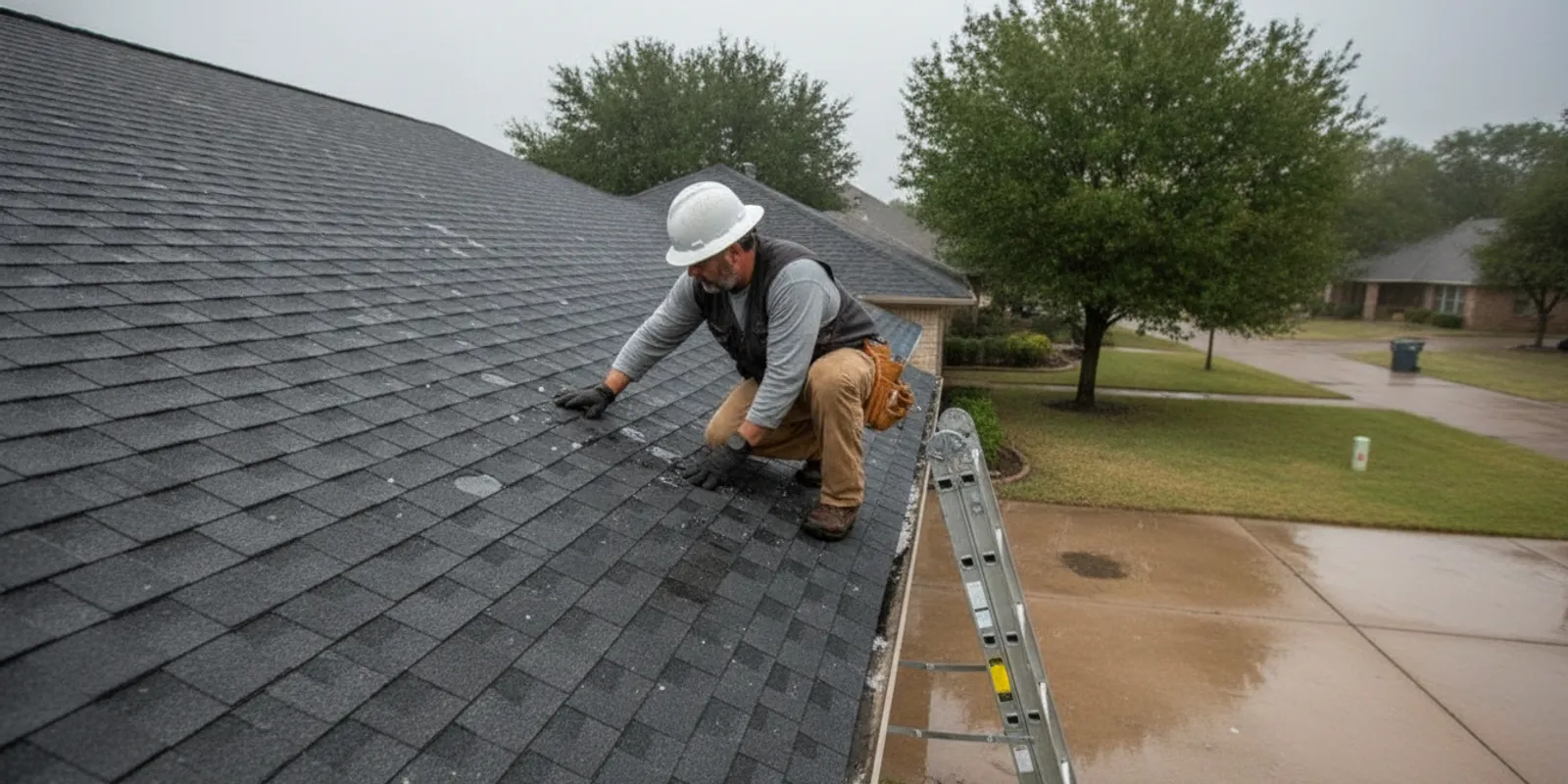
Hail damage roof replacement is not a decision to make from hail size, a few dents, or a neighbor’s repair plan alone. Hail can affect roof coverings and related components in different ways, so the useful first step is to understand what was exposed, what evidence is visible, and whether the roof’s condition calls for repair, replacement planning, or further evaluation. For Texas homeowners and property managers, an organized assessment helps make the next conversation more specific.
Request a free roof inspection
What does hail do to a roof?
Hailstones strike with different force depending on factors such as their size, density, speed, shape, and the angle at which they meet a surface. The roof system matters too. A steep asphalt-shingle roof, a metal panel roof, and a low-slope commercial assembly do not show or respond to impacts in exactly the same way. Nearby walls, vents, gutters, soft-metal fixtures, and outdoor equipment may provide additional clues, but those clues do not by themselves establish the condition of the roof covering.
On asphalt shingles, impacts may leave visible marks, dislodge granules, fracture or loosen a shingle, or affect the underlying surface. Some marks are difficult to distinguish from normal aging, manufacturing variation, foot traffic, or other wear without closer examination. On metal roofing, an impact may leave a dent; appearance alone does not establish whether a panel, seam, fastener, coating, or water-shedding detail has been compromised. Other systems, including TPO and modified bitumen used on commercial roofs, have their own components and failure modes. A mark on one material cannot be interpreted by applying assumptions from another.
Hail may also affect roof accessories and details, including vents, pipe boots, ridge components, skylight surrounds, and flashing. Whether a particular impact creates a leak or shortens service life depends on its location and effect, the roof’s existing condition, and the construction details. Water entry may not appear immediately. Conversely, a ceiling stain discovered after a storm does not prove that hail created the opening; water can travel before it becomes visible indoors.
Research on hail risk considers differences among roof types and the possibility of resulting damage and repair costs. That is a useful reminder that the material and roof assembly belong in an assessment rather than treating every roof as identical. A study of hail hazard modeling for different roof types focuses on the probability of hail damage and resultant repair costs, not a diagnosis of any individual property.
Which roof details deserve careful interpretation?
Visible hail effects vary by material, and some clues are easier to misread than others. On asphalt shingles, scattered granules in a gutter are not a complete measure of roof condition because granules may be present for reasons unrelated to a recent storm. A close inspection should consider the shingle surface and surrounding roof condition together. Do not scrape, bend, or otherwise test shingles yourself; that can create damage or change the evidence.
Metal roofing may show cosmetic impressions that differ from impacts affecting seams, fasteners, coatings, or panel edges. Ask the inspector to identify the affected component and explain whether the observed condition appears limited to appearance or raises a functional concern. A visible dent is not, by itself, a conclusion that the roof leaks or that replacement is necessary. The system’s design and condition should inform the discussion.
On a low-slope roof, the covering may be a membrane or another assembly with seams, transitions, penetrations, drains, and rooftop equipment. Ask that observations be tied to their locations and components. A mark near a drain or equipment curb may need to be understood in context with nearby details and any water symptoms, rather than judged from its appearance alone. If there is standing water or a suspected leak, identify the location and timing for the evaluator.
Gutters, screens, vents, and other exposed items can provide useful context about a storm, but they are not a substitute for examining the actual roof. Likewise, an undamaged accessory does not prove that every roof area escaped impact. Use secondary evidence to guide questions, then ask for findings directly related to the roof system.
Why is a quick visual guess not enough?
A ground-level view can identify concerns worth checking, but it cannot reliably establish the condition of every roof surface or component. Some areas may be hidden by roof geometry or equipment. A person looking from the driveway may see a dented gutter, for example, but not whether the roof covering has damage in the same area. A roof may also have pre-existing wear or past repairs that complicate interpretation.
Hail size is only one part of the context. The same reported storm can affect nearby properties differently because the storm path, roof orientation, tree cover, building height, and roof materials vary. The Insurance Institute for Business & Home Safety describes hail research as work to reduce damage and improve hail forecasting and detection. Its hail research overview provides background on the hazard; it is not a substitute for a property-specific roof evaluation.
A sound assessment separates observations from conclusions. “There are impact marks on the north-facing metal vent” is an observation. “The entire roof must be replaced” is a conclusion that requires evidence about the roofing system, the extent and significance of damage, and applicable project considerations. The inspection should explain how its findings support the proposed scope, and identify uncertainty rather than turning a few visible clues into a universal rule.
Hail-inspection references may use a consistent sample area to record observed impacts, but counting marks is not a stand-alone replacement formula. The InterNACHI discussion of hail-damage inspection notes that the number of hits used to evaluate a roof slope can vary and that roof age matters. The practical takeaway is to ask how the inspection method and the roof’s particular condition inform the conclusion, not to treat a single count as an automatic approval or denial.
What should you document after a hailstorm?
Good records help you explain what happened and compare later findings. Start with information that can be gathered safely from the ground or from existing records. Do not climb onto a wet, steep, unstable, or otherwise unsafe roof to take photographs. If a roof-level assessment is needed, leave that work to a qualified professional using appropriate safety practices.
- Record the event details. Note the date and approximate time you became aware of hail, the property address, and any storm alerts or other event information you already have. Avoid presenting a weather report as proof of damage to a particular roof.
- Photograph visible exterior evidence. Take clear pictures of any marks on accessible gutters, downspouts, vents, window screens, outdoor equipment, or siding. Capture a wider view to show where each close-up was taken. These observations can help orient an inspection, but they do not establish roof damage on their own.
- Photograph interior symptoms. If you notice a new ceiling mark, damp area, or other sign of water, photograph it and note when it appeared. Keep the record factual. Do not assume that every interior stain began during the most recent storm.
- Keep existing roof information. Save installation or repair records, prior inspection notes, product details if available, and photographs taken before the storm. Note known leaks or repairs. A record of prior condition can help distinguish a new observation from an older one.
- Make a simple location log. Write down which side of the building or room shows the concern, when you noticed it, and whether it changes. On a commercial property, identify the building area or unit in terms staff and contractors can recognize.
- Preserve communications and paperwork. Keep inspection reports, estimates, photographs, correspondence, and any insurer documents together. Make copies of originals and record when each item was created or received.
Label photographs with dates and locations rather than editing them to make damage appear more dramatic. If you share images, explain whether they were taken from the ground or from an accessible area. A concise, accurate record is more useful than a large folder of unlabeled pictures.
What should a hail roof inspection explain?
An inspection should give you more than a yes-or-no statement. Ask the inspector to identify the roof areas reviewed, the system and visible components, the observations, and the basis for any proposed work. The scope may differ by property, roof access, system type, and the question you need answered. Clarify any limits, such as areas that could not be safely reached or components that require a different specialist to evaluate.
For a residential roof, useful discussion points may include the visible condition of the shingles or panels, ridge and edge details, penetrations, flashing, valleys, and ventilation components. For a commercial roof, ask how the evaluation considers the membrane or other covering, seams, penetrations, drains, rooftop equipment, transitions, and any accessible interior evidence. These are examples of topics to clarify, not a promise that every inspection includes destructive testing or every component-specific service.
Ask for photographs tied to locations and a written explanation of the findings. If there is an impact mark, the report should distinguish the mark from any conclusion about function or serviceability. Ask whether the report identifies other conditions, such as age-related wear, prior work, or a possible maintenance issue, separately from hail-related observations. This distinction can make the proposed scope easier to evaluate.
Also ask what the inspection did not determine. A roof inspection is not necessarily a structural assessment, a moisture survey, a code evaluation, or a coverage decision. If the findings point to concerns beyond the agreed scope, request an explanation of what additional assessment may be appropriate. Keep the question focused: what is known, what remains uncertain, and what information would help resolve it?
One Real Roofing and Construction describes roofing and construction support for residential and commercial property owners in Texas, including a Dallas–Fort Worth focus. Its stated model is relationship-led: independent sales consultants build customer relationships while the company manages construction. To understand the inspection and project options, you can review the company’s roofing and construction services and ask how the scope applies to your specific property.
How can you prepare for the inspection appointment?
Before the appointment, gather the records you already have and make a brief list of questions. You do not need to decide in advance that the roof needs repair or replacement. It is enough to explain what you observed, when you noticed it, and what information you hope the visit will provide. If another person manages the property or has details about prior work, invite them to share those records or join the discussion.
Tell the inspector about any known leaks, past repairs, roof additions, or areas that have been difficult to access. For a residence, this might include a prior patch or a room where a ceiling mark appeared. For a commercial property, flag sections that have equipment, restricted access, or recurring maintenance needs. This background helps the inspector ask relevant questions, but it should not predetermine the conclusion.
Clarify the inspection’s purpose before it begins. Are you asking for a general condition review, an evaluation of reported hail impacts, or information to help scope a possible project? Ask what the visit will cover and whether there are limits. A visual inspection and a more specialized evaluation are not necessarily the same service. If you need a particular report format or photographs for your records, ask whether that is available rather than assuming it is included.
During the conversation, note the terminology used and ask for plain-language explanations. If someone identifies a particular mark or component, ask where it is and what concern it raises. You can request that the report distinguish direct observations from interpretations and recommendations. If an area cannot be evaluated, ask whether that affects the overall conclusion and what practical next step would address the gap.
After the visit, review the written findings while the discussion is fresh. Check that the property and the areas described are correctly identified. Compare the photographs with the written notes, and follow up on any term or recommendation you do not understand. A useful inspection is one that leaves you better informed about condition and next steps, even when the answer is that more information is needed.
How do you compare repair and replacement planning?
Repair and replacement are different project scopes, not automatic responses to a certain hail report. A localized repair may be considered when the inspected evidence supports a limited intervention and the applicable materials and details can be addressed. Replacement planning may be considered when the observed condition, extent of affected areas, existing roof state, or project requirements make a broader scope worth evaluating. Those are general decision factors, not a diagnosis or a guarantee that either option is suitable for your building.
Ask the contractor to connect the proposed work to specific findings. If replacement is recommended, ask which slopes, sections, or system components are included and why. Ask whether the recommendation accounts for any existing wear or previous repairs. If a repair is proposed, ask what it is expected to address and whether other observed conditions remain outside its scope. If the answer is simply “hail means replacement,” ask for a more detailed explanation.
Consider the roof system and the property’s use. A homeowner may be weighing disruption, interior protection, appearance, and the ability to coordinate repairs with other home work. A commercial owner or manager may also need to consider tenant operations, access, equipment, drainage, and coordination with maintenance or capital plans. A proposal should describe the work in terms you can compare, without suggesting that a particular choice is suitable for every property.
For either option, compare the written scope, not just the total at the end of an estimate. Look for the areas covered, materials identified, removal or preparation work, treatment of roof details, cleanup, and any exclusions or assumptions. Ask how concealed conditions would be documented and discussed if they become visible during construction. The exact contract terms should be reviewed directly with the contractor; do not infer warranty coverage or project outcomes from a general description.
It may help to request a second evaluation if the evidence is unclear, the recommended scope is substantially different from another report, or key areas were not accessible. Give each reviewer the same relevant records where possible. Ask each to explain their own observations rather than merely endorsing or dismissing someone else’s conclusion. Differences in reports are a reason to clarify method, scope, and assumptions.
To organize that comparison, you can use a short set of questions:
- Which roof areas and components were inspected?
- What observations are being attributed to hail, and what evidence supports that interpretation?
- What existing wear, prior repairs, or access limits were noted?
- What work is proposed, and which conditions will remain outside that scope?
- How will materials, details, cleanup, and any concealed conditions be handled in the written proposal?
- What records or follow-up assessment are needed before deciding?
For additional context on a different part of the decision, One Real has a guide to factors that shape a roof replacement estimate. Cost factors are not a substitute for confirming damage or choosing a scope, but understanding how a proposal is organized can help you ask focused questions.
What should you clarify before choosing a project scope?
Once you have inspection findings, ask for a written proposal that translates the recommendation into work you can understand. The proposal should identify the roof area involved, describe the general work and materials, and state what is excluded or assumed. If the contractor recommends replacing only part of a roof, ask how the boundary of that work was determined and how related transitions or details will be addressed. If a repair is recommended, make sure the described repair corresponds to the observed condition.
Ask how the contractor will handle conditions that cannot be confirmed until existing material is removed or opened. The answer should explain how the condition would be documented, how you would be informed, and how any change to the scope would be discussed. Do not assume that every hidden condition is included in an initial estimate. Review the actual contract for the agreed process, payment terms, responsibilities, and any stated exclusions.
Compare proposals on scope before comparing headline totals. Two estimates may use similar labels while including different areas, materials, preparation, or detail work. Write down what each includes and what remains unclear. If a difference matters to your decision, ask both contractors to clarify it in writing. This approach is especially useful when one estimate describes a spot repair and another describes a broad replacement; the question is not only which number is lower, but what evidence and work each number represents.
Planning should also account for the property’s use. A homeowner may want to know how access to the home and yard will be affected, what areas need protection, and what cleanup is part of the described scope. A commercial property manager may need to coordinate roof access, tenant communication, equipment considerations, and building operations. Ask for project-specific details rather than relying on a general statement about timing or disruption.
Finally, confirm who your point of contact will be for questions about the scope and construction process. One Real describes a relationship-led model in which independent sales consultants build customer relationships while the company manages construction. Ask how that responsibility is handled for the particular project and where to direct construction questions. Do not infer a specific schedule, staffing arrangement, or outcome unless it is stated in your current project documents.
How should you handle insurance paperwork?
Keep the insurance process separate from the technical assessment. Your insurer and policy documents determine how a claim is reviewed and what, if anything, may be covered. A contractor’s inspection or estimate can document observed conditions and proposed work, but it does not promise coverage, a particular claim outcome, or a settlement amount.
Organize the materials you already have: the date and description of the event, photographs, inspection notes, estimates, and correspondence. If you receive a request for additional information, record what is requested and when it is due. Read your policy and communicate directly with your insurer about coverage, deadlines, and claim requirements. When policy language or claim rights are unclear, ask the insurer or a qualified professional who is authorized to advise on those matters.
Contractors can provide information about their observations and estimates, but do not assume that a roofing contractor represents you in an insurance matter or can decide the insurer’s responsibilities. One Real’s stated content rules describe insurance assistance as process support, not public adjusting or a promise to negotiate, file a claim for a policyholder, or secure an outcome. If you want help understanding project documentation, ask specifically what assistance is offered and keep coverage questions with the insurer.
Never make a roof-replacement decision solely because someone says an insurer will pay. Similarly, do not rely on a promise that a deductible can be waived or absorbed. Verify the contract, payment obligations, and insurance communications independently. A clear line between construction information and insurance decisions protects your ability to assess each on its own terms.
How does replacement planning differ by property?
For a home, begin by noting the roofing material, the visible roof sections, any interior symptoms, and records of prior work. Think about whether attic access or interior areas need to be made available for evaluation. If there are signs of active water entry, tell the inspector where and when they appeared. Avoid treating a stain, a dent, or a neighbor’s roof project as enough information to set the scope for your own house.
For a commercial property, identify the roof areas, building operations, and any access or scheduling constraints that could affect assessment and construction planning. Note the location of rooftop equipment and drains, and gather available maintenance or repair records. If the property has several roofs or additions, make clear which section is being discussed in each report. A scope that is understandable to ownership, facility staff, and the project team is easier to review and coordinate.
One Real lists commercial roofing and residential roofing among its documented services. You can review its commercial flat roofing guide if the building has a low-slope system, and its Texas residential roofing overview for broader residential context. Those guides provide background; they do not determine whether hail has damaged a particular roof.
In either setting, coordinate decisions around verified information. A replacement proposal may need to account for the actual roof system and project conditions, while a property manager may also need to coordinate access and communicate with occupants. Request clear descriptions of the work and any known limitations before agreeing to a project. Exact timelines, pricing, and service boundaries must come from a current, property-specific discussion rather than general online information.
What are common mistakes to avoid?
- Assuming every dent means a leak. Dents and other marks are observations; their significance depends on the system and location. Ask what the mark means for that component.
- Assuming no visible ceiling stain means no roof concern. Interior symptoms may not appear immediately, and some roof areas are not visible from inside. Ask for an appropriate inspection rather than relying only on the ceiling.
- Using hail size as a replacement rule. Storm reports offer context but do not show the condition of your specific property. Roof type, condition, and inspection findings matter.
- Climbing onto the roof to prove a point. A roof can be slippery, steep, or otherwise unsafe, especially after severe weather. Use ground-level records and request professional evaluation.
- Combining unrelated conditions into one conclusion. Keep hail observations distinct from age, maintenance, prior work, and other issues unless the report explains how they relate.
- Relying on verbal assurances alone. Ask for the observations, scope, assumptions, and limitations in writing so you can compare them later.
- Expecting an inspection to guarantee an insurance result. A technical evaluation and a coverage decision are separate matters. Confirm policy questions with the insurer.
What should you take away about hail damage roof replacement?
Hail damage roof replacement should be considered through evidence about the actual roof, not a single storm detail or a few marks on nearby surfaces. Record what you observe safely, preserve prior roof information, and ask for a property-specific inspection that explains its findings and limits. Then compare the repair or replacement scope against those findings, the roof system, and the needs of the property.
Discuss your roof inspection and project questions
A careful, documented process helps homeowners and property managers make the next decision with clearer information while keeping construction planning separate from assumptions about insurance coverage.