
Seasonal Roof Maintenance Checklist for Texas Properties
Use this Texas seasonal roof maintenance checklist to record visible changes, plan safe follow-up, and prepare useful questions for a roofing professional.
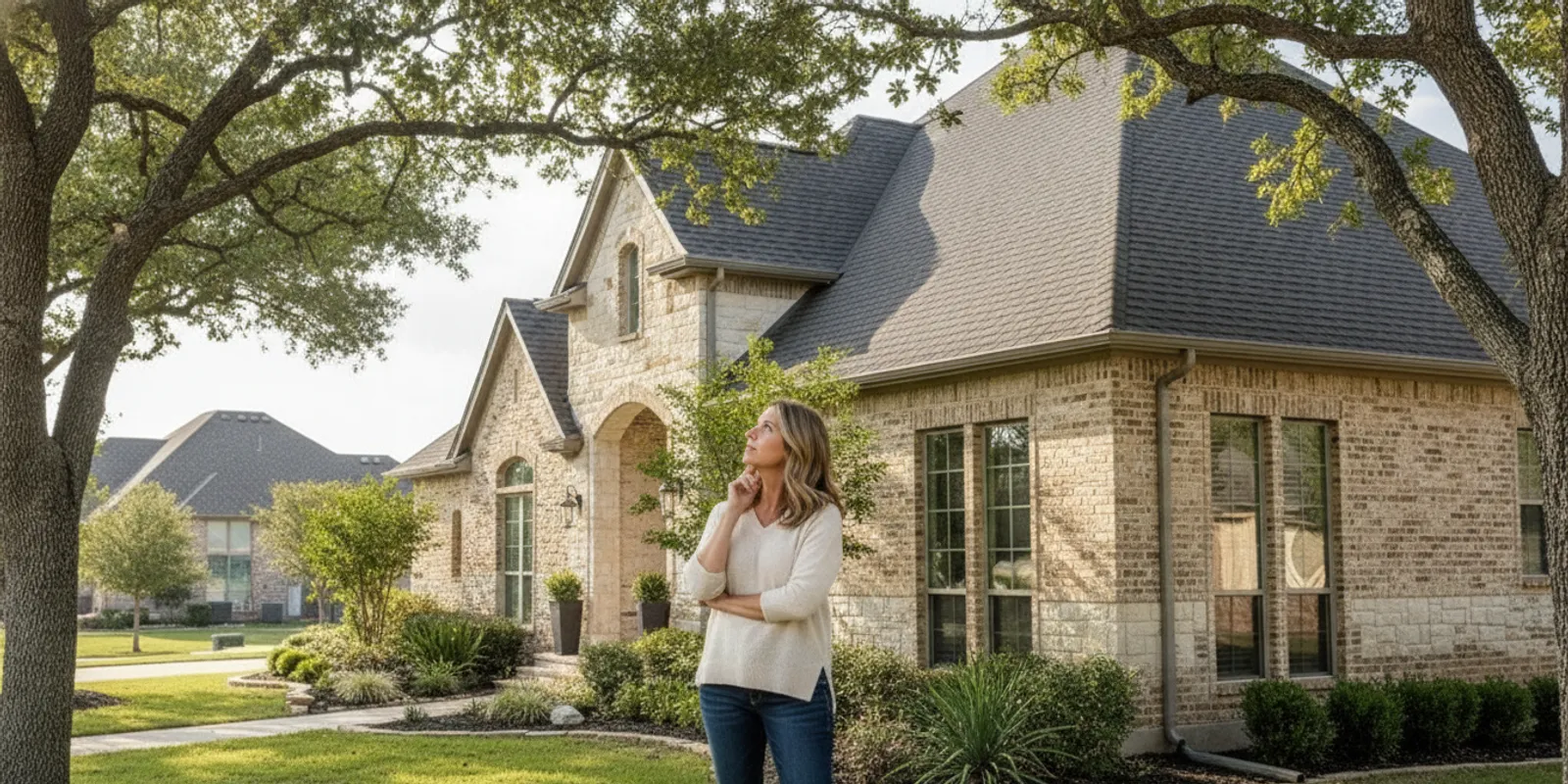
A seasonal roof maintenance checklist for Texas properties helps you notice visible changes and decide what questions to ask next. It is not a roof inspection or repair guide, and it should never require you to climb onto a roof. Homeowners, commercial property owners, and project managers can use a consistent routine to record what they see, keep property information organized, and seek professional guidance when something changes.
Request a free roof inspection
What does seasonal roof maintenance actually cover?
For an owner or facilities team, maintenance starts with a simple distinction: an observation is not a diagnosis. A ceiling mark, debris near a roof edge, or a changed view of the roof surface may be worth recording, but none of those observations alone identifies the cause or the work required. The practical goal is to notice changes, protect people from immediate hazards, and ask for an appropriate assessment when needed.
A homeowner can make observations from the ground and from accessible rooms inside the home. A commercial property manager can also gather reports from occupants, keep a building log, and coordinate professional access. Neither role requires walking the roof or handling roofing materials. Roof systems and access conditions differ, so a routine that works for one property may not suit another.
One Real Roofer and Construction describes roofing and construction support for residential and commercial customers in Texas, including Dallas–Fort Worth. Its stated model connects independent sales consultants who build the customer relationship with construction managed by the company. A maintenance note can help begin that conversation, but it does not establish a diagnosis or promise a particular project result.
When should you use a seasonal roof maintenance checklist?
There is no universal calendar that fits every Texas property. Choose recurring review points that fit the building, its access, and your ability to observe safely. You might review the property at seasonal transitions, during routine facilities rounds, or after a weather event once conditions are safe. Do not go outside or approach the building during dangerous weather for a checklist. The National Weather Service provides forecasts and alerts that can help you plan outdoor activity.
A useful schedule is one you can follow without treating it as a technical standard. Set a reminder, use the same safe viewpoints when possible, and compare notes rather than relying on memory. A seasonal review should not delay attention to active water entry or a safety concern. If something changes between planned reviews, record it and decide whether professional advice is appropriate.
- At a seasonal transition: Compare current observations with prior notes and identify questions that remain open.
- After notable weather: Wait for safe conditions, then look from the ground and check accessible interior areas.
- When a new concern appears: Record when and where you noticed it instead of waiting for the next calendar reminder.
- For a commercial site: Include the review in existing property rounds and assign someone to follow up on open items.
What can you check safely without climbing?
Begin from a stable place on the ground. Binoculars or a phone camera with zoom may help you see a roofline, but they do not make close inspection safe or confirm the condition of concealed layers. Do not climb a ladder, lean from a window, walk a roof, lift materials, or probe a suspected leak to complete a homeowner checklist. If relevant areas are not visible, note that limitation and ask a roofing professional whether a closer review is appropriate.
Observe the roofline and visible surface
Look for changes compared with earlier photographs taken from a similar safe spot. You might notice a section that appears different, debris, or material that looks displaced. Describe only what you can see. Avoid identifying a particular defect or deciding whether repair or replacement is needed based on a distant view.
Many commercial roof surfaces are not visible from the ground. That does not mean the review has failed; it means the checklist has reached its limit. Record which areas could not be seen and leave access and close-up evaluation to a professional. This is especially useful when comparing several properties, since different buildings may have different roof types and access conditions.
Look at drainage features and nearby vegetation
From the ground, note whether gutters appear separated, sagging, or visibly obstructed. Look for persistent overflow marks or erosion near a discharge point. Those signs can have multiple explanations and do not prove a roof problem. Do not climb to clear a gutter or reach a branch. If vegetation needs attention, consider an appropriate tree-care professional, particularly where overhead wires or elevated work are involved.
Also note whether branches touch or hang close to the building. Record the location and take a photograph from a safe place if useful. Avoid treating a checklist as a pruning plan. The aim is to flag a property condition that may deserve follow-up, not to prescribe work from a ground-level view.
Check accessible interior spaces
Look for new or changing marks on ceilings and upper walls, peeling finishes, damp-looking areas, or an unexplained musty odor. A stain can have more than one possible source, so record its location and timing without assuming that the roof caused it. In a commercial space, ask occupants to report where and when they noticed a change, then distinguish their report from what you personally observed.
If water is actively entering, prioritize safety. Keep people away from wet electrical equipment and any area that may be unsafe. Move belongings or use a container only if it can be done safely. Do not enter a hazardous area to take a photograph or collect evidence; contact the appropriate property professional for guidance.
Which seasonal checklist fits your property?
Use the table as a planning aid, not as a technical inspection standard. “Next step” means a reasonable follow-up for a concern, not a diagnosis. If a check cannot be completed from an ordinary safe location, document that fact rather than trying to reach the area.
| Review point | Safe observation | Record | Possible follow-up |
|---|---|---|---|
| Seasonal transition | Compare visible roofline, drainage, and interior areas with prior observations. | Date, viewpoint, and any apparent change. | Ask a roofing professional whether further assessment is appropriate. |
| After notable weather | Wait until conditions are safe; look from the ground and check accessible rooms. | Event date, observation date, and locations. | Describe specific concerns without assuming the event caused them. |
| Routine property rounds | Note interior water marks or reports from occupants. | Room, first-noticed date, reporter, and whether it changed. | Notify the responsible property contact and set a follow-up owner. |
| Before a planned project | Review available records and identify occupancy or access needs. | Building use, known concerns, and questions. | Clarify proposed scope and coordination with the contractor. |
| Multi-site review | Use consistent prompts while keeping each building distinct. | Property identifier, observation date, and action owner. | Arrange a professional review for concerns or areas not visible. |
How should you document what you notice?
Useful records are factual, dated, and easy to revisit. Start a log for each property, whether it is a page in a maintenance binder or a digital record. Include the date, the person who made the observation, and the viewpoint or room. If someone else reports a concern, identify it as a report rather than presenting it as a confirmed finding.
- Use a location: Write “water mark near the east end of the hallway ceiling,” not simply “roof issue.”
- Separate fact from interpretation: Describe what is visible and keep possible causes as questions.
- Record timing: Note when it was first noticed and whether it looked different later.
- Keep photographs in context: Take them only from a safe location and retain the date and viewpoint.
- Track the next action: Name who will contact a professional and when the concern will be revisited.
For a commercial portfolio, use a clear building identifier and separate logs for separate properties. Include the affected area, relevant occupancy or access considerations, and the person responsible for follow-up. Do not let a note from one building become an assumed condition report for the rest of the portfolio.
A sample entry might read: “November 4, west hallway, new ceiling mark reported by tenant; photo taken from floor; source not assessed; property manager to request evaluation.” This is more useful than an entry that declares a roof failure without evidence. Keep prior inspection notes and project documents with the property record if they are available.
How do you decide what needs attention first?
A checklist is not a risk score. It cannot rank hidden roof conditions from a ground-level view. It can help you separate immediate safety matters from changes that need a professional opinion and routine observations that should remain on file.
- Address immediate safety: Keep people clear of unsafe areas or wet electrical equipment. Do not enter a hazardous space to gather evidence.
- Respond to active conditions: If water is entering or a condition is changing, record the time and location and contact the appropriate property professional rather than waiting for a scheduled review.
- Seek guidance for uncertain changes: A changed-looking roof section or persistent interior mark is a reason to ask a question, not to self-diagnose.
- Track routine observations: Assign an owner and revisit the note at a sensible time if there is no immediate concern.
This order helps a household or facilities team communicate clearly without claiming more than it knows. Describe separate observations separately. One symptom should not obscure another, and timing after a storm is useful context but does not by itself establish cause or insurance coverage.
What should you leave to a roofing professional?
Leave roof access, close-up evaluation, material handling, and repair decisions to an appropriately qualified roofing professional. A checklist cannot determine whether a roof needs repair, reroofing, or another kind of work. It cannot confirm concealed layers or identify the source of every interior mark.
One Real Roofer and Construction describes free roof inspections and roofing support for Texas residential and commercial customers, including Dallas–Fort Worth. The company’s website outlines roofing and construction services, including residential and commercial work. An inspection conversation can clarify what areas are accessible, what the review covers, and what remains uncertain.
For commercial properties, ask how the review will account for building use, access, and coordination. One Real describes commercial roofing, pre-construction consulting, project management engagements up to six months, and special-project support. These are distinct needs; a seasonal observation log is not a project scope. You can learn more about commercial roofing support and the company’s commercial projects when deciding what to ask about.
How can you prepare for an inspection conversation?
Before contacting a roofer, gather enough detail to explain the concern. You do not need to estimate a repair or identify a roof system if you do not know it. Be specific about what you observed and what you want clarified.
- Identify the property: Say whether it is a home or commercial building and provide the location.
- Describe the observation: Explain what changed and where, using neutral terms.
- Share the timing: Say when you first noticed the change and whether it has continued.
- Explain coordination needs: For a commercial site, mention operating hours, occupied areas, and access procedures.
- Ask what the assessment includes: Clarify which areas can be reviewed, what may not be accessible, and how findings will be communicated.
- Keep the written information: Save notes or an estimate so you can relate the proposed scope to your original question.
When comparing proposals, first check whether each one addresses the same reported concern. Ask what work is included, what remains uncertain, and whether additional assessment is needed. A short label such as “repair” or “replacement” is not enough to compare two scopes if the described work differs. The roof inspection checklist guide can help you think through questions about the review process.
What changes for commercial roof maintenance?
Commercial maintenance requires coordination as well as observation. A roof may not be visible from the ground, access may be governed by site procedures, and occupied areas may need planning. A checklist written for a house is not automatically sufficient for a commercial property.
Set a repeatable reporting process. Decide who can submit observations, who maintains the log, and who is responsible for contacting a professional. For each open item, note the building, location, date, reporter, current status, and next action. If the property has tenants or regular operations, describe the coordination needs early when requesting an assessment.
When several buildings are involved, use the same basic prompts but keep findings separate. Do not assume that buildings share a roof system, condition, or inspection schedule. A portfolio summary can list which properties need follow-up, but each concern should remain tied to the building where it was observed.
How should you handle insurance-related questions?
A seasonal review or contractor estimate does not determine insurance coverage. Keep observations and estimates distinct from decisions made by your insurer. One Real Roofer and Construction describes assistance with discussing the claim process and preparing or discussing contractor estimates. Do not assume a contractor files a claim for a policyholder, negotiates a settlement, acts as a public adjuster, or decides what a policy covers.
Ask the insurer questions about policy terms and claim decisions. When speaking with a contractor, clarify the role they will play and what documentation they can provide. Do not infer coverage, deductibles, or a claim outcome from a roof observation alone.
What checklist mistakes should you avoid?
- Climbing for a closer look: A checklist does not justify roof access or ladder work.
- Calling an observation a diagnosis: Record what you see and where; leave interpretation to an appropriate assessment.
- Assuming every stain is a roof leak: Note the location and ask for evaluation rather than declaring a cause.
- Waiting for the next season when a concern is active: A calendar routine is not a reason to delay attention to active water entry or a safety issue.
- Treating one checklist as a technical standard: Roof systems, visibility, and property use differ.
- Assuming a storm proves damage: Record timing as context, not as proof of cause or coverage.
- Leaving notes without follow-up: Assign an owner and a next step for each unresolved concern.
How can you make the record useful over time?
A record is most useful when it stays brief enough to maintain and specific enough to support a later conversation. Give each entry a date, location, observer, and status. Use neutral descriptions and preserve the difference between direct observation, an occupant report, and a professional’s assessment.
For example, a homeowner might record a ceiling mark in a bedroom, take a picture from the floor, and note whether it changes over the next few days. The homeowner should not open the ceiling or climb onto the roof to trace it. A facilities manager might record a tenant report, note the affected suite, and arrange access coordination. Both records make the original question easier to explain without asserting its cause.
Keep follow-up information with the initial note: whom you contacted, when you spoke, what areas were assessed, and what next action was discussed. If the professional could not view an area, record that limitation. This prevents a partial review from being remembered later as a full assessment.
Where multiple people manage a property, agree on a simple vocabulary and a single place for records. Avoid vague entries such as “check roof” that do not identify a location or owner. A short, complete entry is more actionable than an elaborate log that no one updates.
What questions help clarify proposed work?
After an assessment, ask for a plain explanation of what was observed and what work is being proposed. You do not need technical training to ask where the concern is, what was accessible, and how the proposed work relates to the original observation.
- Which areas were reviewed, and were any areas not accessible?
- What did you directly observe, and what remains uncertain?
- Which reported concern does the proposed work address?
- What is included in the scope, and what is outside it?
- Are there alternatives, and what are the limits of each?
- What access or occupant coordination is needed?
- What will be provided in writing, and whom should I contact with questions?
These questions help connect the observation to a proposed next step. For a larger construction or remodeling need, separate the roof concern from other planned work and clarify responsibilities before treating a seasonal checklist as a construction plan. One Real’s residential roofing information may be a relevant starting point for homeowners with a roofing question.
How should seasonal maintenance fit into a property plan?
Roof observations can be one part of a broader property record that also tracks building use, access, and planned improvements. If a roof project could affect tenants, customers, stored goods, or operating areas, raise those needs early in the planning conversation. The property owner and contractor can clarify coordination and responsibilities before work is planned.
For a home, note which rooms are occupied and where an interior concern appears. For a commercial building, identify the property contact, access procedures, operating-hour constraints, and relevant site rules. These are planning details, not predictions about project duration or guarantees that disruption can be avoided.
Keep observation logs separate from project instructions. A log explains what has been noticed over time; a project scope describes work discussed and agreed. Keeping those records distinct can make it easier for owners, facilities teams, and contractors to understand which information is confirmed and which decisions remain open.
Frequently asked questions
How often should I use a seasonal roof maintenance checklist?
Choose review points that fit the property and safe observation opportunities. Consistent visual reviews can help you compare changes, but no single frequency fits every roof. Ask a roofing professional about an inspection when you have a concern or cannot see relevant areas safely.
Can I inspect my roof myself?
You can observe from the ground and accessible interior spaces, but do not climb onto the roof or handle roofing materials. A ground-level view cannot confirm concealed conditions or diagnose a leak. Arrange a professional assessment if you need a closer review.
Should I check the roof after every storm?
Do not go outdoors during unsafe weather or assume every storm caused damage. Once conditions are safe, you can note visible changes from the ground and check accessible interior spaces. Seek professional advice if you observe a concern.
Does a checklist tell me whether to repair or replace a roof?
No. It helps organize observations and questions. A professional assessment and a clearly described scope are needed to discuss possible work for the property.
Can a seasonal review confirm insurance coverage?
No. A visual review or contractor estimate does not decide what a policy covers. Ask your insurer about coverage and clarify the contractor’s role in any claim-related discussion.
Contact One Real to discuss an inspection
A careful seasonal routine helps you notice changes and ask better questions; it is not a substitute for professional assessment. Keep observations safe and specific, then seek guidance when something needs a closer look.