How Long Does a Metal Roof Last? Factors That Affect Service Life
Learn what affects metal roof service life, from material and installation to Texas weather and maintenance, and how to plan inspections and replacement.
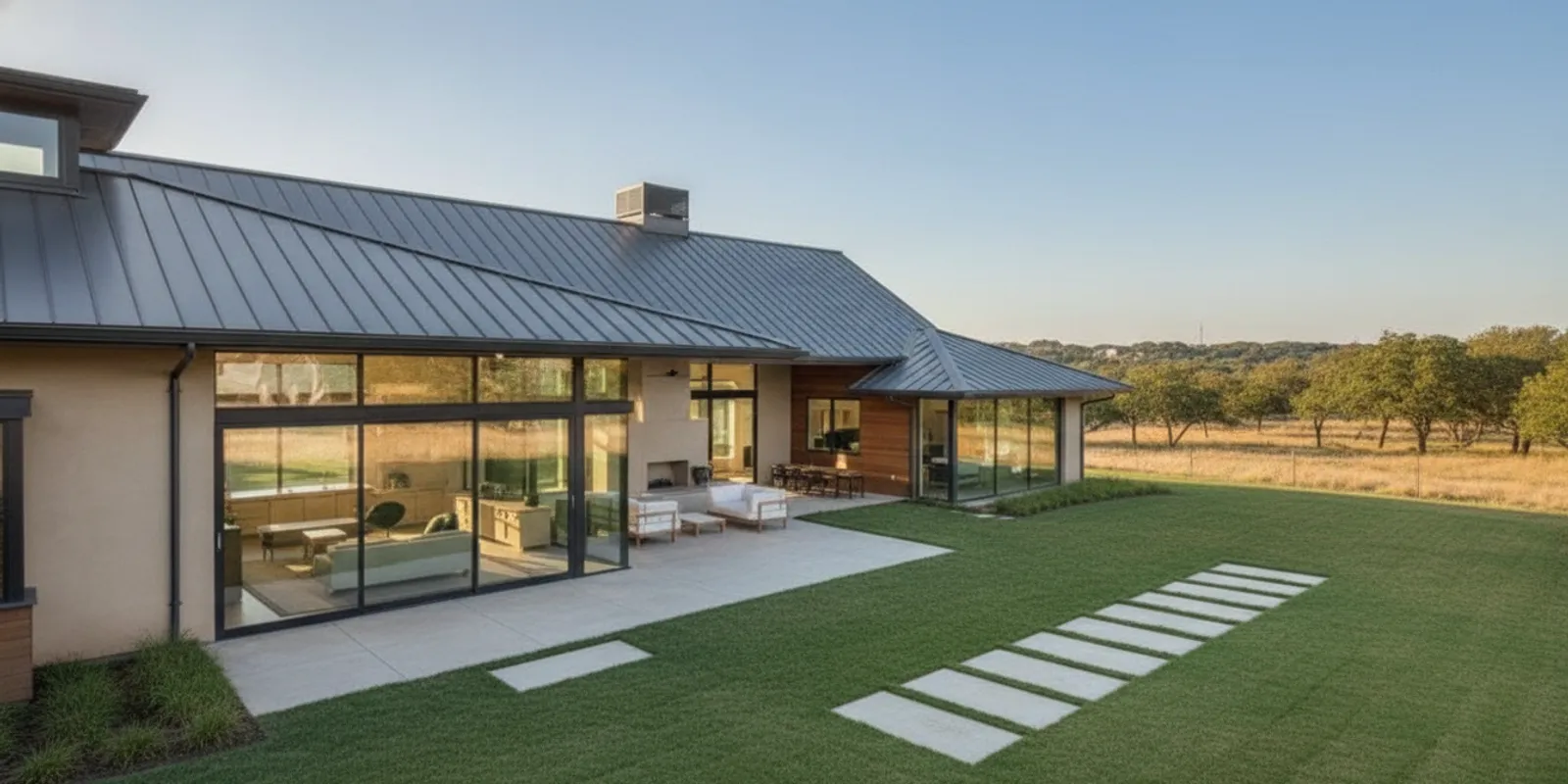
How long does a metal roof last? There is no one service-life number that applies to every roof. The answer depends on the metal and finish, how the system was installed, roof design, local exposure, and the care it receives over time. For Texas homeowners and commercial property owners, a better approach is to understand those factors, watch for changes, and plan inspections before a small concern affects other parts of the building.
Discuss a metal roof inspection
Why is there no single lifespan for every metal roof?
A roof is a system, not just a visible layer of metal. Panels or metal shingles work together with fasteners or clips, seams, flashing, underlayment, drainage, and transitions around edges and penetrations. Their condition and compatibility matter. A durable panel cannot make up for a detail that lets water into the building, and a sound roof assembly can still need maintenance or repair as parts age.
It is also important to distinguish among three different ideas:
- Expected service life: A general planning estimate for a roof system under assumed conditions. It is not a promise for a particular property.
- Warranty period: A period and set of terms defined by a specific warranty. It does not automatically establish how long the whole roof will perform or what every repair will cost.
- Useful remaining life: A condition-based judgment about how much more service a particular roof may provide. That judgment depends on inspection findings and cannot be determined from age alone.
Two roofs installed in the same year may be in different condition. They can use different products, have different workmanship and details, and face different drainage and weather exposures. Even roofs on the same building can have different conditions where shade, water flow, rooftop equipment, or previous repairs vary.
Which material and roof system is installed?
“Metal roof” describes a family of systems, not one material with one lifespan. A property may have standing-seam panels, exposed-fastener panels, or metal shingles. The roof may use different metals, gauges, coatings, panel profiles, and attachment methods. Each system has its own product specifications and installation requirements.
Ask for the available project records before comparing general claims about longevity. Useful information includes the product name, panel or shingle type, finish, installation date, underlayment and flashing details, and warranty documents. If the records are incomplete, a qualified roofing professional may be able to identify visible system characteristics during an assessment, though some concealed details may not be verifiable without opening the roof.
A coating or finish is part of the system, but the word “metal” by itself does not identify its condition or remaining service life. Finish performance can be affected by the product, exposure, installation, and maintenance. Look for changes such as peeling, chalking, corrosion, or exposed areas, and ask what the observed condition means for the specific roof rather than assuming every discoloration signals failure.
Metal roofing comparisons should account for the building and intended use, not just a product label. One Real Roofing and Construction describes residential and commercial roofing work that includes metal systems. Property owners can review the company's roofing and construction services and compare project questions with this guide to metal roof installation cost factors.
How does installation quality affect service life?
Installation has a direct role in how the roof handles water movement, building movement, and temperature changes. Metal expands and contracts as temperatures change. The system must be installed according to its requirements so panels, seams, clips, fasteners, and penetrations can perform as intended. Cutting corners or mixing incompatible components can create weak points that are difficult to see from the ground.
Common areas to review include:
- Fasteners and attachments: The fastener type, placement, and installation must suit the panel system and roof substrate. On exposed-fastener systems, ask how fasteners and washers are checked and maintained.
- Seams and panel ends: Ask whether seams, laps, and transitions are assembled in line with the product requirements and the roof's drainage direction.
- Flashing: Valleys, ridges, edges, walls, chimneys, vents, and other roof penetrations need coordinated details that shed water rather than channeling it beneath the roof covering.
- Underlayment and substrate: These concealed parts form part of the roof assembly. Ask what was specified and whether project documentation identifies the materials and preparation.
- Movement and layout: Panel lengths, clips, and attachment details need to accommodate the system's design and expected movement.
- Repair compatibility: Repairs should account for the existing material, finish, and attachment method. An improvised patch can conceal a symptom without correcting its source.
When reviewing a proposal, ask the contractor to describe the complete scope, including removal or preparation of existing materials, underlayment, flashing, penetrations, drainage, cleanup, and how any discovered conditions will be handled. Request product and warranty documents and clarify which components are included. A clear scope makes it easier to understand what is being installed and what is outside the proposal.
One Real's documented model is relationship-led: independent sales consultants build customer relationships while the company manages construction. For an owner, the practical question is how responsibilities, communication, and construction scope will be explained for the particular project. Do not assume a sales conversation alone answers technical installation questions; ask who will address the written scope and field conditions.
How do Texas weather and the property environment matter?
A roof's surroundings can influence its exposure. Texas properties may experience periods of intense sun and heat, heavy rain, wind, hail, and changing temperatures. Conditions differ by location and individual storm, so a general description of Texas weather cannot determine the condition of a particular roof. Tree cover, airborne debris, nearby buildings, roof orientation, and drainage also vary from property to property.
After a significant weather event, look for changes from a safe location, such as displaced or visibly damaged panels, debris, damaged gutters, or water stains inside. Do not climb onto a roof to investigate. A visual check from the ground or interior is not a substitute for a professional inspection, and some damage may not be obvious without a closer assessment.
Corrosive exposure may also be a consideration in some environments, especially where contaminants or moisture persist. The material and protective finish should be appropriate for the actual conditions. Ask the roofing professional to explain what they observed and whether any concern calls for cleaning, maintenance, repair, or a more detailed evaluation. Avoid applying a generic rule to every Texas property.
For weather and safety information, property owners can consult the National Weather Service. For industry background on metal construction systems, the Metal Construction Association provides a professional association resource. Neither general resource replaces an assessment of a roof's product, installation, and observed condition.
What role do maintenance and inspections play?
Maintenance does not make a roof last indefinitely, but it can help owners notice problems and address them before they spread. Start with the maintenance guidance for the installed product and any applicable warranty. Do not assume that cleaning methods, coatings, sealants, or repair materials suitable for one system will work for another.
A sensible care routine can include:
- Keep project records. Save the installation scope, product information, warranty documents, inspection notes, and repair history. These help a future inspector understand what is on the roof.
- Observe from safe places. After storms and during normal property checks, look for changes to the roofline, panels, gutters, and interior ceilings. Avoid walking on the roof or attempting repairs.
- Pay attention to water paths. Ask that drainage, gutters, downspouts, valleys, and areas around rooftop equipment be reviewed. Water that does not drain as intended can signal a broader issue.
- Arrange an assessment when something changes. Leaks, stains, loose-looking components, visible corrosion, damaged flashing, or repeated repairs are reasons to seek a professional opinion.
- Follow system-specific recommendations. Get advice on maintenance and repair materials for the actual roof, and keep a record of work completed.
Inspection timing should reflect the roof's age, condition, exposure, and history. There is no universal schedule that can be prescribed from the word “metal.” Owners can discuss an inspection plan with a roofing professional and arrange an assessment when a concern arises or after a weather event. One Real's overview of roof inspection services explains the kinds of questions to raise when planning an inspection.
For commercial buildings, include the roof in broader property maintenance planning. Coordinate access and inspection timing with building operations, and account for rooftop equipment and drainage. Document the location of any leak, when it appears, and whether it changes with weather. That information can help an inspector investigate the source. A commercial property owner can also review this guide to signs a commercial roof may need attention.
How can you keep useful roof records?
A practical record makes it easier to compare observations over time. It does not need to be elaborate: a dated folder with the contract, product documents, inspection notes, repair invoices, and photographs can provide useful context. Keep the records with the building's other maintenance documents so a future owner, facility manager, or roofing professional can find them.
When taking photos from a safe location, use consistent viewpoints where possible. Include a wide view that identifies the roof area and a closer view of visible changes from the ground or an accessible interior area. Label the date and location, such as “north eave” or “stain below rooftop unit.” Do not approach an edge, climb a ladder onto a roof, or attempt a close-up that requires unsafe access. A photograph may document an observation, but it cannot establish what caused it.
For each inspection or repair, record what was reviewed, what was visible, what was inaccessible, and which actions were recommended. If the professional uses terms you do not recognize, ask for a plain-language explanation and a written note. Separate confirmed observations from possible causes: “water stain in the storage room after rain” is more precise than recording an unverified conclusion about a leak source.
These records are especially useful when the roof has undergone multiple repairs or when a building changes hands. A repair history can show whether the same location has been addressed repeatedly, whether the concern moved, and what material was used. It will not prove that a repair caused later damage or that every part of the roof is sound, but it gives an inspector a clearer starting point.
How does roof design affect the outcome?
Roof shape and detailing affect water flow and the number of transitions that need careful installation. Pitch, valleys, hips, ridges, eaves, wall intersections, and penetrations all influence how the roof sheds water and where details must be coordinated. A complex roof is not automatically a poor design, but it can require careful planning and execution at more locations.
Drainage deserves particular attention. If water ponds or repeatedly collects where it should drain, ask for an evaluation of the roof assembly and drainage path. Metal panels do not correct an underlying drainage problem by themselves. Likewise, a roof replacement proposal should explain how the new system will connect to walls, edges, existing structures, and rooftop equipment.
Building movement, ventilation, insulation, and the condition of the roof deck may also be relevant to the overall assembly. These are building-specific questions. A professional should explain what was observed, what is known, and what cannot be confirmed without further investigation. Do not rely on an estimate of roof age to answer questions about concealed conditions.
What should an inspection help you understand?
An inspection is most useful when it turns a general concern into documented observations and practical next steps. Before the visit, gather the installation date if known, product or warranty paperwork, repair history, and a short description of any change you have noticed. For a leak, note the room or area, when the stain appears, and whether it follows particular weather. This context can help direct attention, although the visible interior mark may not be directly below the point where water entered.
During or after the assessment, ask the roofing professional to separate findings into clear categories:
- Observed condition: What was visible, such as a displaced component, worn sealant, damaged flashing, debris, or an interior moisture mark?
- Likely concern: What may explain the observation, and what other possible causes remain?
- Urgency: Does the issue call for prompt attention to limit further water entry, or can it be included in planned maintenance? Ask what evidence supports that distinction.
- Limits of inspection: Which sections, concealed layers, or details could not be checked, and what further access or investigation would be needed?
- Next action: Is the recommendation to monitor, maintain, repair, obtain another assessment, or consider replacement planning?
Ask for locations and photographs or notes that connect recommendations to visible conditions. If a proposal recommends broad replacement based on one reported leak, ask what observations indicate a system-wide concern and whether a targeted repair is a reasonable alternative to evaluate. Conversely, if repairs have repeatedly addressed symptoms without resolving water entry, ask how the source will be investigated. The purpose is not to insist on a particular outcome but to understand the reasoning and remaining uncertainty.
An inspection cannot necessarily reveal the condition of every concealed component. A roof may have inaccessible areas, and some questions can only be answered through additional investigation or opening part of the assembly. A careful report should make those limits clear rather than presenting an estimate as certainty. This is particularly important when the roof is older, project records are missing, or prior work has changed the original details.
How should homeowners and commercial owners plan differently?
The inspection questions are similar across property types, but the way owners organize the work may differ. A homeowner may focus on protecting living areas, documenting a ceiling stain, and understanding whether a repair or a future replacement should be budgeted. A commercial owner may also need to coordinate access, tenant or staff activity, rooftop equipment, and building operations. These differences affect planning and communication; they do not change the need to evaluate the roof system itself.
For a home, note which rooms show moisture, whether the mark changes after rain, and whether there are visible changes to gutters or roof edges from the ground. Keep the home's installation and repair records in one place. If you are considering a sale or renovation, identify the roof's known history and ask what can be confirmed during an assessment. Do not assume that a roof's age alone answers a buyer's or project manager's question about its condition.
For a commercial property, identify an on-site contact who can explain access restrictions and point out known leak locations. A simple roof-area map can help relate an interior report to a location, especially where multiple units, corridors, or rooftop systems are involved. Record when a concern was first observed, weather conditions at the time, any temporary measures already taken, and whether the problem recurred. Share that information with the roofing professional, but distinguish firsthand observations from assumptions about the cause.
Where building operations make access complicated, discuss the process before setting an inspection. Clarify which areas can be reached, whether equipment or restricted zones affect the review, and how findings will be delivered. If the roof cannot be examined fully in one visit, ask what remains unchecked and whether a follow-up is needed. A commercial assessment should not be described as free unless that offer has been specifically confirmed for the request; One Real's stated free roof inspection is not established as a free commercial inspection.
In either setting, define the decision you need to make. An owner responding to an active leak may need to understand immediate protective steps and the source investigation, while an owner planning capital work may need a documented condition overview and comparable scopes. When you contact a roofing company, state that purpose, describe what you have observed, and ask what information the assessment can reasonably provide. One Real's roof inspection checklist offers another set of questions to consider before an inspection.
How can different metal systems affect planning?
The system type influences what an owner should ask about, although the product name alone does not predict remaining life. Use the following distinctions as a conversation guide, not as a ranking of durability:
- Standing-seam panels: Ask how the panel system is attached, how its seams and end conditions are detailed, and how movement is accommodated. Confirm which flashing and trim components are part of the assembly and how penetrations are treated.
- Exposed-fastener panels: Ask what fasteners and washers were specified, how their condition is assessed, and what maintenance the product guidance calls for. The attachment points are visible, but a visual check alone does not establish whether the roof is watertight.
- Metal shingles or tiles: Ask how the individual units connect and how edges, valleys, ridges, and transitions are finished. The visible shape can differ from panel roofing, so repair materials and procedures should match the particular system.
For all three, confirm the actual material and finish rather than relying on a broad label. Find out whether replacement parts or compatible repair materials can be identified from project documents. If the system is unfamiliar to the current owner, a professional assessment can document visible details and note what remains unknown. That information is valuable even if the immediate finding is that no repair is presently recommended.
Owners evaluating a new system should compare the complete assembly and written scope, not simply the metal type. Two proposals may use similar-looking panels but differ in substrate preparation, underlayment, flashing, fastening details, penetrations, removal, and cleanup. Ask each contractor to explain these differences in terms of the building and the specified product. A lower initial scope that leaves critical details unclear is difficult to compare fairly with a more complete description.
How can you plan for repair or replacement?
Use condition and project records alongside age. A roof nearing the end of a planning horizon is not automatically ready for replacement, and a relatively recent roof is not automatically trouble-free. A useful next step is to request an assessment that distinguishes immediate concerns from longer-term planning items.
When you speak with a roofing professional, ask:
- What specific areas were inspected, and were any areas inaccessible?
- What visible evidence supports the reported condition?
- Are the issues isolated to a detail or present across multiple areas?
- What repair options are appropriate for this specific metal system?
- Could a repair address the observed concern, and what uncertainty remains?
- If replacement is being considered, what is included in the proposed system and scope?
- What product documents and warranty terms apply, and who is responsible for each part of the work?
- What maintenance or follow-up should be recorded after the work?
For a replacement decision, compare proposals on equivalent scope rather than headline price alone. Check that each proposal identifies materials, flashing and edge details, underlayment, removal or preparation, disposal, rooftop penetrations, and how concealed conditions may affect the work. Compare exclusions and warranty documents, too. If a major element is unclear, request a written explanation before choosing.
Texas property owners dealing with storm-related concerns should keep the roofing assessment separate from decisions about insurance coverage. A contractor can discuss technical observations and an estimate, but should not be represented as a public adjuster, promise a claim outcome, or suggest that a deductible can be waived or absorbed. Keep copies of relevant documents and direct coverage questions to the insurer or an appropriately authorized professional.
One Real offers a free roof inspection as a stated offer, and describes project support for residential and commercial roofing customers. Availability and fit depend on the specific request; the article does not promise a particular appointment time or outcome. Owners who need replacement-planning context can also read the guide to factors that shape a roof replacement quote.
What should you take away about metal roof service life?
The most useful answer to “how long does a metal roof last” is specific to the property. Material and finish, installation quality, roof design, weather exposure, drainage, maintenance, and repair history all shape the roof's condition. No one factor or age estimate can guarantee how long a particular roof will remain serviceable.
Build a record of the installed system, observe changes safely, and ask for a professional assessment when you see a concern or need to plan ahead. A clear inspection report and scope can help you decide whether maintenance, repair, or replacement deserves attention now.
Contact One Real about your roofing project
With reliable records and a condition-based plan, you can make the next roofing decision with a clearer understanding of the work your property may need.