Storm Damage Roof Repair: Texas Owner's Guide
Learn safe steps for storm damage roof repair in Texas, from documenting visible damage and arranging an inspection to discussing insurance paperwork.
eknickell0Oct 211 min read
After a Texas storm, the safest first step is not climbing up to look for damage. Wind, hail, slick surfaces, exposed power lines, and weakened roofing materials can create hazards that are difficult to judge from the ground. A careful visual check can help you decide what to do next, but it cannot replace a professional assessment.
Request a free inspection or insurance-process consultation from One Real Roofing and Construction.
For storm damage roof repair, stay off a damaged roof, document visible conditions only from safe areas, and arrange a professional inspection. Take photos or video from the ground when possible, keep related records, and ask qualified professionals about the condition and appropriate next steps.
That safety-first approach helps separate useful documentation from risky roof access. Begin by securing people and property, then look from ground level for visible warning signs before moving into the inspection and repair decisions that follow.
How to Start Storm Damage Roof Repair Safely
Before you inspect the roof, protect people and property. A storm-damaged roof can have loose materials, hidden structural weakness, wet surfaces, or nearby utility hazards. OSHA notes that roofing surfaces may be steep, slippery, or deteriorating, and that roof work can take place near power lines. Its guidance applies to experienced inspectors and construction workers, not just untrained property owners. Do not climb onto the roof or use a ladder to investigate damage yourself.
Look for immediate hazards from a safe location.
Stay clear of sagging areas, fallen lines, exposed wiring, unstable branches, broken glass, and loose sections of roofing. Keep children, pets, and other occupants away from the affected area. If you see a downed power line, smoke, fire, or another immediate threat, move away and contact the appropriate emergency service or utility provider.
Check the property from the ground.
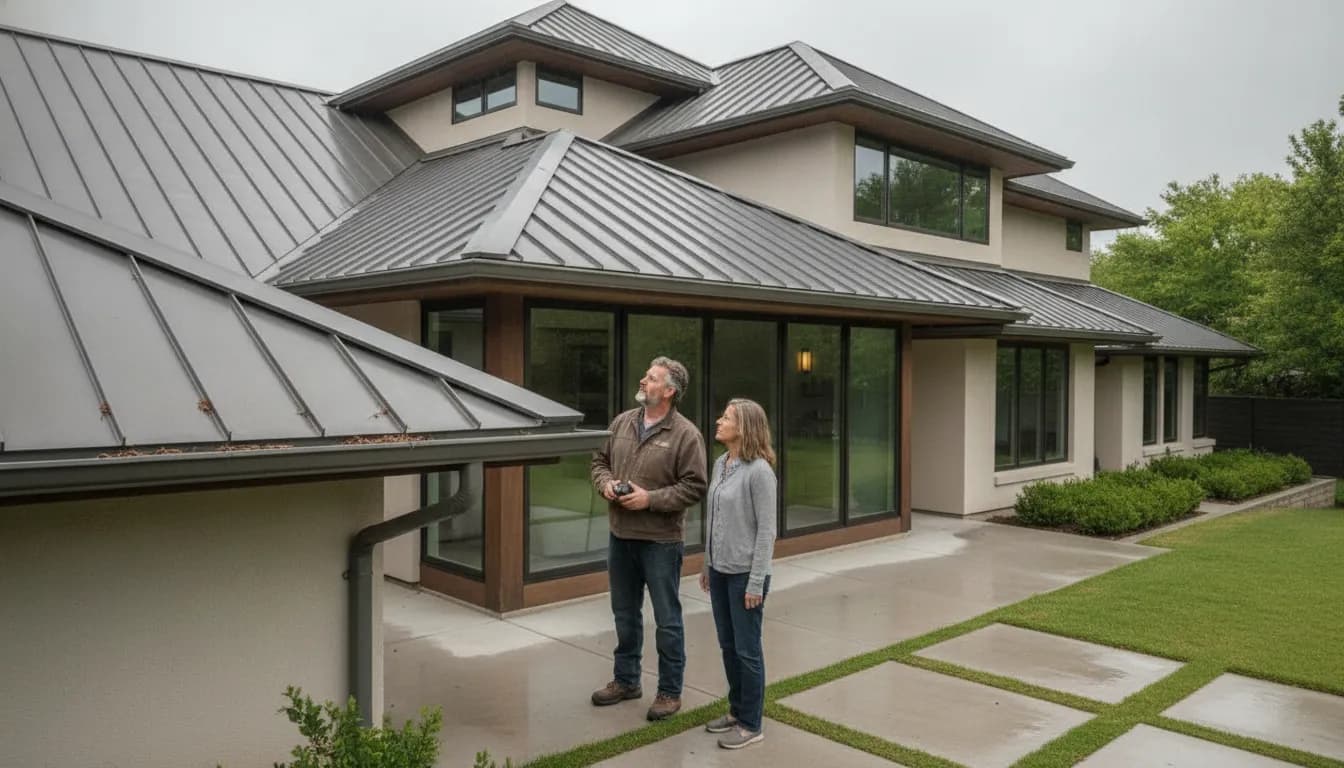
From several angles, look for missing or displaced materials, debris, visible holes, damaged gutters, leaning components, or water entering the building. You can also check ceilings and upper walls for new stains or active dripping from inside. Take photos or video only from a stable, safe position. Ground-level observation helps document apparent conditions, but it is not a professional roof inspection.
Do not attempt a tarp or temporary repair unless you are qualified.
OSHA identifies roof inspection and tarp installation as hazardous work. Plastic sheeting may serve as temporary protection when permanent repairs cannot happen immediately, but securing it often requires roof access and creates fall, slip, and material-handling risks. Limit work before an insurer inspection to necessary emergency repairs, and ask a qualified professional how to protect the property safely.
Arrange qualified help when damage is possible.
A damaged roof should be inspected and then repaired or replaced as appropriate to help prevent further structural damage. Seek an inspection if you notice interior water, a sagging ceiling, suspected structural damage, or significant exterior debris, even when there is no immediate leak. A qualified contractor can assess conditions that cannot be seen from the ground and explain next steps without asking you to make a dangerous climb.
For general roof-work safety information, review OSHA's roof inspection guidance. When you are ready to discuss residential and commercial roofing options, review the company's roofing and construction services.
What Signs Can Point to Storm Damage?
A storm does not always leave behind an obvious opening or an active leak. From the ground, look for changes that were not present before the weather event, then arrange a professional evaluation rather than treating any one sign as a diagnosis.
Look for changes across the roofline
Missing, lifted, curled, or visibly shifted shingles can indicate wind impact. Hail may leave dents, bruising, or scattered marks on shingles and other exposed roofing materials. You may also find loose granules in gutters, downspouts, or around the base of the home. Granules alone do not prove hail damage, since normal aging can also loosen them, but an unusual amount after a storm is worth documenting.
Use binoculars or ground-level photos if they help you see details. Do not climb onto the roof or walk on a surface that may be steep, slippery, deteriorating, or weakened. OSHA notes that damaged roofs should be inspected and then repaired or replaced to help prevent further structural damage. Review OSHA roof inspection safety guidance before attempting any storm-related work.
Check the edges, drainage, and nearby ground
Storm impact can affect more than the center of the roof. Look for bent or separated flashing, damaged vents, displaced edge metal, dented gutters, loose downspouts, and debris on the roof or in the yard. Fallen branches, broken pieces, or scattered roofing materials may help establish that the property experienced an event, even when the roof looks intact from a distance.
Notice interior clues, too
Water stains on ceilings or walls, damp insulation, peeling paint, or a musty odor can point to moisture intrusion. Photograph these areas and note when they appeared. A dry ceiling immediately after the storm does not prove the roof is undamaged. Some damage may not leak until later rainfall, and the source of an interior stain may require professional investigation.
These observations can help you communicate clearly with an insurer or roofing professional, but they cannot determine whether repair or replacement is appropriate. A qualified inspection is the next step for storm damage roof repair decisions.
How to Document Damage Before Storm Damage Roof Repair
Good records help you explain what happened without putting yourself on an unsafe roof. Keep the documentation factual and time-specific. The Texas Office of Public Insurance Counsel recommends photos or videos, receipts, and records of communications related to repairs. Use this checklist before storm damage roof repair begins.
Start from safe locations.
Photograph or record the roof, siding, gutters, vents, flashing, windows, fences, and fallen debris from the ground or another stable location. Do not climb onto a roof, use a ladder, walk on wet or damaged surfaces, or approach downed lines. Roof surfaces can be steep, slippery, or deteriorating, and roof work may occur near attached utility lines. If there is an immediate electrical, fire, structural, or flooding hazard, leave the area and contact the appropriate emergency service or qualified professional.
Capture wide and close views.
Take a few wide images that show which side of the property is pictured, then make closer images of visible damage. Include interior water stains, wet materials, damaged ceilings, and affected belongings when it is safe to do so. Video can provide helpful context, but do not disturb debris or remove materials just to create a clearer image.
Add dates and locations.
Record the storm date if known, the date and time of each photo or video, and the area of the property shown. Note when you first noticed a leak, stain, missing material, or other change. Keep the original files, and consider backing them up so the record is not lost.
Save related expenses.
Keep receipts for emergency mitigation, temporary materials, inspections, or other storm-related work. Write down what each expense addressed. A receipt alone does not establish coverage, so keep it with the matching photos and notes.
Preserve communications.
Save emails, texts, call notes, inspection reports, estimates, and messages exchanged with your insurer, agent, contractor, or property manager. Record names, dates, and the subject of each conversation. The OPIC guidance recommends obtaining an insurer inspection and written estimate, then reviewing any repair contract before signing. See the
Texas OPIC roof-repair guidance
for the underlying recordkeeping recommendations.
Limit work before inspection.
Before the insurer's inspection, make only emergency repairs needed to prevent immediate additional damage or protect people and property. Document the condition first when possible, photograph the temporary measure, and keep receipts. Emergency mitigation is not the same as deciding what permanent storm damage roof repair the property needs.
Once the record is organized, share it with the insurer and a qualified roofing professional so the next inspection can focus on the condition that was documented.
How Do You Arrange an Inspection and Compare Repair Options?
A ground-level check can help you note visible concerns, but it is not a professional inspection. Do not climb onto a roof after a storm. Roof surfaces may be steep, slippery, or deteriorating, and ladders, power lines, and temporary tarps add risks. An inspector or qualified roofing professional can evaluate areas you cannot safely reach.
Start by contacting your insurance company about an inspection and request a written estimate of covered damage or recommended work. The Texas Office of Public Insurance Counsel also advises reviewing repair contracts before signing. Keep the insurer's estimate with your photos, videos, receipts, and repair communications so you can compare documents rather than relying on verbal descriptions. Insurance coverage and required steps depend on the policy and circumstances, so an inspection is not a promise that a claim will be approved.
Questions to ask before selecting a contractor
Before comparing repair options, verify who you are hiring. The Texas Department of Insurance recommends checking the contractor's name, address, telephone number, and references. Ask for evidence of current insurance or a bond, and contact references with specific questions about communication, workmanship, and completion. Be cautious with unsolicited door-to-door offers and pressure to decide before you can review the details.
Request written bids that describe the proposed work, materials, preparation, cleanup, and any exclusions. Texas Department of Insurance guidance recommends getting at least three written bids to compare. The lowest number is not automatically the best option if the scope is incomplete or unclear. Ask each contractor to explain whether the recommendation is repair or replacement and what inspection findings support it.
Before work begins, obtain a signed written agreement and review the warranty terms, including what is covered and who handles questions after completion. Keep a copy of every document. After the work is finished, check that the agreed scope was completed and retain photos for your records. One Real Roofing and Construction provides residential and commercial roofing and related construction support, so property owners can review the documented service scope while deciding whom to contact.
Sources: Texas OPIC roof repair guidance and Texas Department of Insurance storm repair guidance.
What Should Texas Homeowners Know About Insurance Paperwork?
Good records can make the insurance conversation easier to follow, even when coverage and claim decisions depend on your policy and insurer. Start by gathering your policy information, the date and likely cause of the storm, the property address, and a short description of what you observed. Add ground-level photos or videos of visible damage, interior water stains, and affected rooms. The Texas Office of Public Insurance Counsel recommends obtaining an insurer inspection and a written estimate after roof damage, then reviewing any repair contract before signing.
Keep one folder for the claim or repair project. Save photos in their original form, along with receipts for reasonable emergency work, inspection notes, estimates, emails, text messages, and call dates. A simple timeline can help you remember who said what and when. Before the insurer inspects the property, limit work to emergency repairs needed to reduce additional damage. Ask your insurer or agent what documentation is required for those repairs and how to submit it. These documentation and pre-inspection limits are consistent with OPIC guidance on roof repairs.
Questions to ask about Texas requirements
Does the repair need to meet the International Building Code or International Residential Code?
Does the property fall under a Texas windstorm requirement or inspection program?
If the work is inspected, will a Certificate of Compliance, Form WPI-8, be relevant to the property or policy?
Which local building official should confirm applicable requirements?
Texas Department of Insurance guidance says these questions can matter especially in the first row of counties bordering the Gulf of Mexico and certain Harris County locations. If your insurance requires IBC or IRC compliance, ask your agent or adjuster about the Windstorm Inspections Program. The Texas Department of Insurance explains that inspected, compliant work may result in Form WPI-8 for TWIA, while local building officials can clarify local requirements. Requirements vary by property and policy, so get answers in writing when possible.
One Real Roofing and Construction may discuss insurance paperwork or the claim process and can provide a roof inspection and claim assistance conversation. The company should not be understood as a public adjuster, and it cannot promise coverage, claim approval, settlement results, or a particular repair outcome. Keep the insurer or agent responsible for explaining policy decisions, and use the written estimate and contract to compare the proposed work carefully.
Does Every Storm-Damaged Roof Need Replacement?
Not necessarily. The right path depends on what a qualified inspection finds, including the roof's age and the extent of the damage. It also depends on the condition of the roofing material, active or concealed leaks, and concerns about the underlying structure. A few visibly damaged shingles may call for a different response than widespread damage. Repeated leakage, or a roof that was already near the end of its useful service life.
Repair discussion
Replacement discussion
Damage appears limited and the surrounding materials remain serviceable.
Damage is widespread, recurring leaks are present, or the roof's age and condition raise broader concerns.
A qualified inspection supports a targeted scope with clear limits.
The inspection identifies affected components or conditions that make a limited repair unreliable.
The written recommendation explains what will be repaired and what should be monitored.
The written recommendation explains why replacement is more practical than repeated repairs.
Questions to ask before choosing repair or replacement
What specific areas are damaged, and how was that determination made?
Is the damage limited to the surface, or are the deck, flashing, ventilation, or other components also affected?
Could the roof continue performing reliably after a repair, or would existing age and material condition make replacement more practical?
What work is recommended now, and what conditions would require follow-up later?
What should be documented for the property owner, insurer, and contractor before work begins?
Ask for the reasoning behind the recommendation rather than accepting a replacement decision without an explanation. A second professional opinion may also help when the proposed scope is extensive or the available information is unclear. Texas OPIC advises property owners to obtain an insurer inspection and written estimate, and to review repair contracts before signing. Review the state's roof-repair guidance alongside the inspection and contractor documents.
Temporary protection is not a permanent solution
If permanent work cannot happen immediately, plastic sheeting may serve as a temporary patch to limit additional exposure. OSHA describes this as temporary protection, not a substitute for inspecting and repairing or replacing the damaged roof. Roof inspection and tarp work can involve falls, slippery or deteriorating surfaces, ladders, and nearby power lines. Do not climb onto a storm-damaged roof or attempt roof work without appropriate training and equipment. A qualified professional can explain what limited mitigation is appropriate for the property.
Once the condition and options are documented, the next step is a clear conversation about the recommended scope and any insurance paperwork. One Real Roofing and Construction can help property owners discuss a roof inspection and the construction path that may fit the observed condition, without promising coverage or a particular outcome.
Frequently Asked Questions
How soon should I inspect my roof after a storm?
Start with a ground-level check when conditions are safe, looking for visible debris, missing materials, or interior water signs. Do not climb onto the roof. Arrange a professional inspection if you see possible damage, because roof surfaces can be steep, slippery, or deteriorating. The Occupational Safety and Health Administration identifies these hazards for roof inspection and repair work.
Can hail damage a roof even if there is no leak?
Yes. Hail or wind damage may not produce an immediate leak. Shingles, flashing, vents, and other roof components can be affected while the interior still appears dry. A professional inspection can help determine whether the condition calls for monitoring, repair, or replacement. A ground-level observation is useful documentation, but it is not a substitute for an inspection.
What should I do if I see water stains after a storm?
Photograph or record the stains, move belongings away from the affected area if it is safe, and arrange an inspection. Keep receipts and records of communications related to the damage. Before an insurer inspection, limit work to emergency repairs needed to reduce further damage, consistent with guidance from the Texas Office of Public Insurance Counsel.
Does every storm-damaged roof need replacement?
No. The appropriate option depends on the roof's condition, the extent and location of damage, material condition, leaks, and any structural concerns. OSHA advises that a damaged roof should be inspected and then repaired or replaced to help prevent further structural damage. Ask for a written explanation of the recommended work and review the agreement before signing.
Will insurance cover my storm damage roof repair?
Coverage depends on the policy, the documented damage, and the insurer's review, so no contractor can promise approval or a specific payment. Ask your insurer or agent what documentation is needed and whether local code requirements apply. A roofing company may help organize project information or discuss the insurance process, but that is not the same as acting as a public adjuster.
Ready to discuss the next step?
A professional inspection can help clarify visible storm damage and give you a practical basis for deciding what to do next. If you have insurance-process questions, One Real Roofing and Construction can discuss the paperwork and inspection process without promising coverage or a claim outcome. To schedule a free roof inspection or talk through your questions, contact One Real Roofing and Construction.