
Hail Season in Texas: When It Peaks and How to Prepare Your Roof
Learn when hail season tends to peak in Texas, what to check before and after a storm, and how to plan a careful roof assessment without rushing repairs.
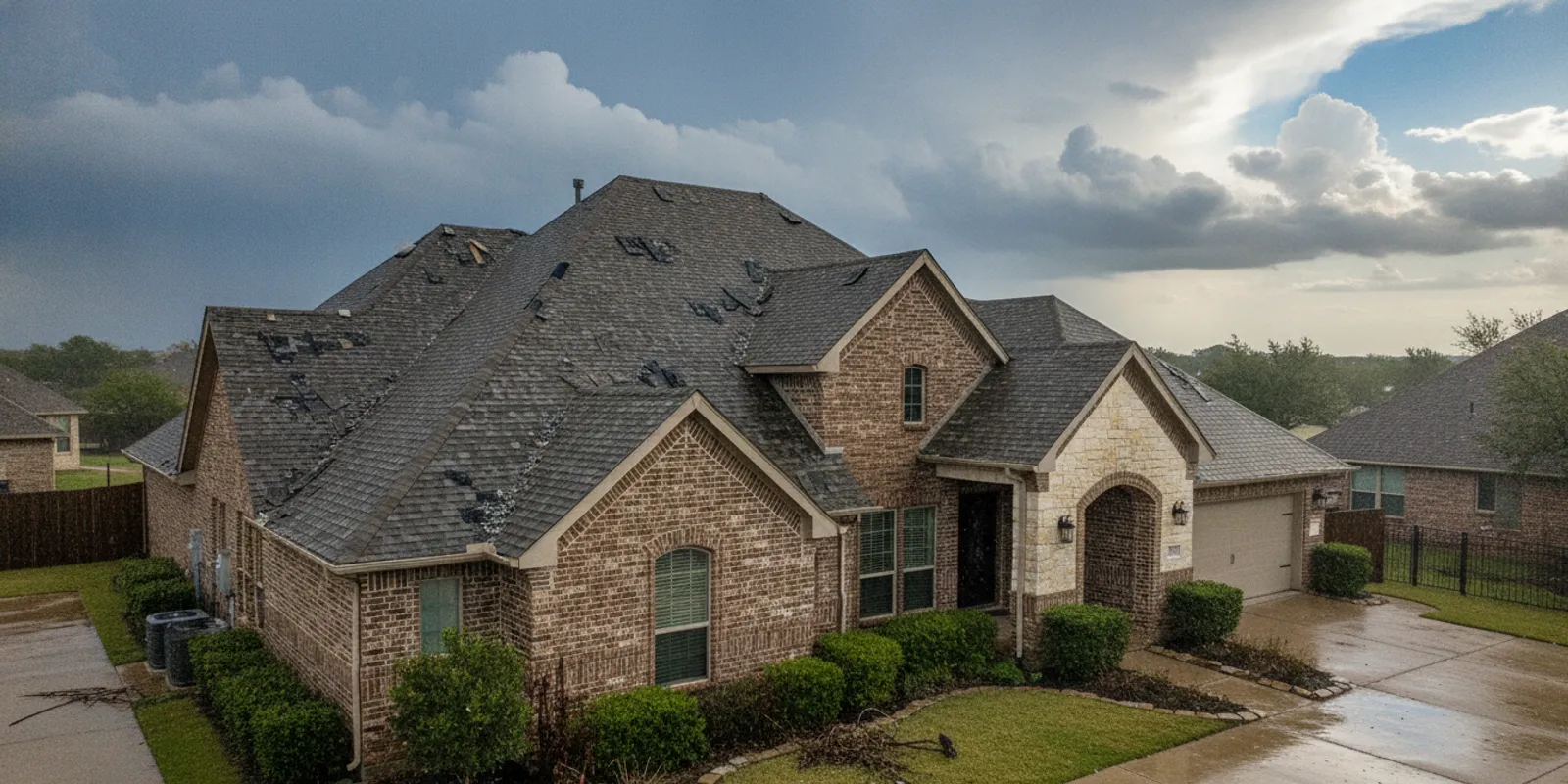
Hail season in Texas does not begin and end on one statewide date. Storm risk varies by region and weather pattern, so property owners benefit from preparing before the first severe-weather forecast rather than relying on a calendar alone. For homeowners, commercial property owners, and project managers, a calm plan can make it easier to check conditions, document concerns, and decide whether a professional roof assessment is appropriate.
When is hail season in Texas?
Texas can experience hail in different seasons, and the timing depends on location and weather conditions. North Texas and the Dallas–Fort Worth area commonly face severe-thunderstorm concerns in spring. The National Weather Service describes spring as the peak season for thunderstorms in DFW and notes that large hail and damaging winds occur nearly every year somewhere in the metroplex. That is useful context for planning, not a prediction that a particular property will be hit or damaged.
Hail can also occur outside the spring peak. A storm calendar is therefore a reminder to stay alert, not a substitute for current forecasts. Check official weather alerts when storms threaten, and avoid going onto a roof during or immediately after dangerous conditions.
What should Texas property owners do before hail season?
Preparation is mostly about knowing the property's baseline and making information easy to find. You do not need to climb onto a roof to prepare. Start with safe, ground-level observations and records.
- Keep existing records together. Save prior inspection notes, project documents, and available photographs in one place. Note the date and what each record shows.
- Record visible exterior conditions safely. From the ground, take clear pictures of roof edges and other visible exterior areas. Do not use a ladder or walk on a roof to get a closer view.
- Know where water appears indoors. If you have previously noticed a ceiling stain or leak, record its location and date. A stain alone does not establish its cause, but the information can help guide a later assessment.
- Review your policy and contact details. Keep your insurer's contact information handy. Read your own policy for applicable duties, deadlines, and coverage terms; these differ by policy and situation.
- Have a post-storm routine. Decide who will check the property from safe locations, where pictures and notes will be stored, and how you will arrange an assessment if concerns arise.
For a home, the routine may involve one owner or household member. For a commercial property, establish who can access the site, record observations, and communicate with the property manager or insurer. A simple plan reduces confusion without assuming damage or a particular repair outcome.
What should you do after a hailstorm?
Wait until conditions are safe. Do not inspect a roof during active weather, while lightning is present, or when surfaces may be wet or unstable. From the ground, look for visible changes such as dents on accessible exterior items, displaced materials, or new water intrusion. These observations may justify follow-up, but they do not confirm roof damage or identify the right repair.
- Note the storm and discovery dates. Write down when the storm passed and when you first noticed a concern. Keep the details factual.
- Take photos from safe locations. Photograph visible conditions from the ground or from inside the building. Avoid stepping onto the roof or using a ladder.
- Protect people and property. If water is entering, keep people away from affected areas where appropriate and contact qualified help for the immediate concern. Do not attempt hazardous temporary work.
- Arrange an assessment when warranted. A roofing professional can evaluate accessible roof conditions and explain what the observations may mean. An inspection is not the same as an insurer's coverage decision.
- Keep communications and documents. Save estimates, photographs, correspondence, and inspection notes. Ask questions if a document uses terms or scopes you do not understand.
Some storm marks can be hard to see from the ground, and not every visible mark means the roof needs replacement. Conversely, no obvious ground-level sign does not prove that every roof area is unaffected. Avoid making a repair or replacement decision from a single photograph or a neighbor's experience.
How do hail season and roof type affect preparation?
Hail exposure is not the only factor in a roof decision. Existing roof condition, system type, building design, installation details, and the specific storm all matter. Asphalt shingles and metal roofing are among the systems property owners may discuss with a contractor; commercial buildings may use systems such as TPO or modified bitumen. The presence of a material name alone does not establish its condition or performance on a particular building.
Preparation should focus on knowing what is installed where possible, collecting available records, and requesting an assessment that explains observed conditions. For a property with additions, multiple roof sections, or different systems, ask the assessor to identify which areas were reviewed and whether access limitations left anything unexamined.
| Property or system context | Useful preparation | Questions to ask after a storm |
|---|---|---|
| Residential roof with asphalt shingles | Keep prior roof documents and ground-level photos; note any indoor water concerns. | Which roof areas were inspected? What specific observations support each recommendation? |
| Metal roof on a home or building | Record the system information available from prior project documents and note visible changes from safe locations. | Are the marks or changes documented, and what do they mean for this roof's condition? |
| Commercial roof with TPO or modified bitumen | Identify roof sections, access procedures, and who is responsible for documenting site concerns. | Which sections were accessible? Are recommendations separated by area and scope? |
| Building with more than one roof area or system | Keep a simple site plan or list of areas if available, and retain records by location. | Does the assessment distinguish each system and explain any limitations? |
The table is a planning aid, not a damage diagnosis. A roofing assessment should explain observations and scope in terms that fit the particular property.
How can you compare roof assessment or repair proposals?
When a property owner receives more than one recommendation, compare what each document says will be examined or done. Do not compare only a headline total, especially when the scopes differ. One proposal may describe a limited repair while another discusses a larger area or replacement. Ask each provider to make the scope clear.
- What roof areas and materials are included?
- What conditions were observed, and where?
- What work is proposed, and what is excluded?
- Are access limits, assumptions, or unknown conditions stated?
- What documents or photographs support the recommendation?
- Who is responsible for construction management and communication?
- What warranty language is actually written into the proposal?
One Real Roofer and Construction describes a relationship-led project model: independent sales consultants build the customer relationship while the company manages construction. Property owners can ask how communication and construction responsibility will be handled for their specific project. The company's stated Lifetime Labor Warranty is a first-party promise; ask to review the actual written terms rather than assuming coverage details.
Learn more about the company's roofing and construction services, including residential and commercial work. Homeowners can also review the practical overview of storm damage roof repair and the guide to hail damage roof replacement planning. These resources can help frame questions, but an article cannot determine the condition of an individual roof.
What should you know about insurance-related roof questions?
Insurance coverage depends on the policy, the facts, and the insurer's review. A contractor's estimate can describe observed conditions and proposed construction work; it does not decide coverage. Keep discussions factual, provide requested information through the appropriate channels, and ask your insurer about policy terms or claim requirements.
Texas rules set important boundaries for contractors. The Texas Department of Insurance says a contractor who may perform work on a property cannot act or advertise as a public adjuster for that property, including negotiating settlements or filing claims for the policyholder. TDI guidance distinguishes those activities from providing an estimate or discussing technical information with an insurer or adjuster. A contractor also cannot waive, rebate, or absorb a deductible. Review the guidance directly at Texas Department of Insurance: contractor and insurance guidance.
One Real Roofer and Construction can help customers discuss the claim process and prepare or discuss contractor estimates. That is not a promise to file a claim for you, negotiate a settlement, or determine coverage. For policy questions, contact your insurer; for legal questions, consult a qualified legal professional.
How should commercial property owners plan for hail?
Commercial planning benefits from clear site roles. Identify who can authorize access, who should receive weather alerts, and how observations will reach the owner or facilities contact. If a building has tenants, establish how they should report a leak or other concern and whom they should contact. Keep these directions simple and specific to the property.
After a storm, record the affected location, date, and any visible interior effect. For larger roofs, make a list of roof sections or building areas so the assessment can distinguish them. Ask whether the inspection covered all relevant areas and whether any were inaccessible. A well-defined assessment is more useful than a broad statement that a roof is either “fine” or “damaged.”
Commercial owners considering a larger project can review commercial roofing services and examples of commercial project work. The right next step depends on the property and the observed conditions, not on a generic post-storm checklist alone.
How can homeowners and managers make the record useful?
A record is most helpful when another person can understand it without guessing. Use a consistent folder for each property and label files with a date, location, and brief description. For example, “2026-04-18 north elevation from driveway” is more useful than “roof photo.” Keep original files when possible, since edited images may omit context. A written note can explain where the photographer stood and what prompted the picture.
Do not present an observation as a diagnosis. A note such as “water stain appeared in the upstairs hallway after the storm” describes what you saw. “Hail caused roof failure” asserts a cause that may not yet be established. This distinction helps keep conversations with a roofer, insurer, or property manager clear and factual.
If you manage several buildings, use the same basic fields at each site: property identifier, storm date, discovery date, reported location, visible condition, photo references, and action taken. Keep tenant reports separate from conclusions. A tenant may accurately report a drip without knowing where water entered the building or what caused it.
What does a practical post-storm workflow look like?
A useful workflow moves from safety to observation, then to a decision about follow-up. It does not assume that every hail event requires a claim or a roofing project. Consider this sequence after severe weather has passed and local conditions are safe:
- Confirm the site is safe to approach. Look for downed lines, unstable branches, standing water, and other hazards. Follow local emergency guidance and do not enter an unsafe area.
- Check for urgent interior effects. If water is entering, protect occupants and contents where practical without taking risks. Record the room and approximate location, and seek appropriate help for immediate hazards.
- Make a perimeter observation. From a safe place, note visible changes to gutters, siding, windows, or roof edges. These are clues to document, not proof of roof damage.
- Compare with the baseline. Look at earlier photos or maintenance notes. Record only what appears new or different; avoid inferring the cause from appearance alone.
- Choose the next contact. For a roof concern, contact a roofing professional to ask whether an assessment is appropriate. For policy interpretation or claim instructions, contact the insurer directly.
- Keep a simple timeline. Record who was contacted, when, and what information was exchanged. Save estimates and reports with the photos.
For instance, a homeowner might see a new ceiling mark and a loose-looking gutter from the yard. The sensible next move is to note the date, photograph both from safe positions, and request guidance rather than deciding that the entire roof must be replaced. A facilities manager might receive reports of water in one tenant suite but see no obvious exterior change. The manager can document the room and time, check adjacent areas safely, and ask that an assessment identify the roof section reviewed.
In each case, preserve the difference between what is known, what is suspected, and what remains to be checked. That approach makes the eventual assessment more focused and reduces the chance that assumptions become treated as facts.
How should you prepare for a roof assessment?
Before an appointment, gather the information that can help an assessor understand the property. You do not need to know technical roofing terms. A short description of the building, known roof system, recent work, and concern is enough to begin a useful conversation.
- Identify the property and whether it is a home, commercial building, or project site.
- List the areas of concern, such as a ceiling stain, visible exterior change, or a section reported by a tenant.
- Gather available installation, maintenance, and prior inspection records.
- Share when the storm occurred and when the concern was first noticed.
- For a commercial site, explain access procedures, site contacts, and any areas that require coordination.
- Ask what the assessment can cover, how findings will be documented, and whether any limitations are expected.
During the discussion, ask the assessor to distinguish findings from recommendations. “This area was observed” and “this work is recommended” are different statements. If a report recommends work, ask which observation supports it, what alternatives were considered, and what areas are outside its scope. You can also ask whether the next step is monitoring, a focused repair assessment, or a broader project discussion; the answer should be based on the particular observations rather than the mere fact that hail occurred.
One Real Roofer and Construction offers free roof inspections. The company describes a relationship-led approach in which independent sales consultants build the customer relationship and the company manages construction. Ask how the proposed communication and construction responsibilities apply to your property, and request that scope and next steps be explained plainly.
How can you compare recommendations without rushing?
Two recommendations can sound different because they may address different scopes. To compare them fairly, place the documents side by side and mark the same basic items: areas examined, conditions described, work included, exclusions, assumptions, and proposed next steps. If one report refers to “the roof” generally while another identifies individual sections, ask for enough detail to understand the difference.
Imagine a small home with a reported leak over one room. One proposal may focus on investigating that area and making a limited repair if appropriate. Another may discuss a wider roof project because of other observations. The useful comparison is not simply which option is smaller or larger. Ask what evidence supports each scope, whether the immediate water concern is addressed, and what the owner should expect if an unseen condition is found during work.
For a commercial building, compare proposals by roof section and system. A site may include separate additions or areas installed at different times. Ask whether the estimate separates them and states what is included in each scope. If a proposal includes project management or other support, clarify the specific responsibilities, communication path, and deliverables in writing rather than assuming they are identical across providers.
Also make sure that warranty language belongs to the proposal and is readable. The company's stated Lifetime Labor Warranty should not be interpreted beyond its written terms. Ask which document controls, what work the language applies to, and whom to contact with questions. Do not treat a broad phrase in a conversation as a substitute for the actual written terms.
What should property owners understand about hail timing?
Seasonal patterns help with readiness, but they do not give a precise forecast for a particular address. A spring reminder can be useful for checking that contact information and records are in order. It cannot tell you whether a storm will form, how large hail will be at your property, or whether a particular roof will be affected.
North Texas residents may pay particular attention during spring because that is the regional peak identified by the National Weather Service for DFW thunderstorms. Owners elsewhere in Texas should use local forecasts and alerts for their own area rather than assuming the DFW pattern applies everywhere. In either case, make decisions from current weather information and the observed condition of the property, not from a generic calendar.
It is also useful to distinguish the storm date from the date a concern is found. A leak may only become noticeable later, and a property manager may receive a tenant report after the weather event. Recording both dates makes the chronology clearer without claiming that one event caused the other. If an insurer has a reporting process or deadline, follow the policy and the insurer’s instructions rather than relying on a general article.
What should you know about an inspection and insurance discussion?
An inspection can document accessible roof conditions and support a discussion about possible construction scope. It does not establish insurance coverage, and it should not be presented as a coverage decision. A contractor estimate and an insurer’s decision have different purposes. Keep each conversation within that role.
Texas Department of Insurance guidance is especially relevant after a storm. A contractor who may perform work cannot act or advertise as a public adjuster on that property, negotiate the policyholder’s settlement, or file the claim for the policyholder. Contractors may provide estimates and discuss technical information with an insurer or adjuster, while deductible waivers, rebates, or absorption are not allowed. Read the state guidance at TDI’s contractor and insurance information.
One Real Roofer and Construction can help customers discuss the claim process and prepare or discuss contractor estimates. The company’s free claim-process consultation is not a promise to file a claim, negotiate a settlement, or determine what a policy covers. If you have a coverage question, contact your insurer. If you need legal advice, consult an appropriately qualified legal professional.
When should you contact a roofing company?
Consider requesting an assessment when you see a new leak, visible exterior changes, or a storm-related concern that cannot be evaluated safely from the ground. You can also ask questions if an insurer requests a contractor estimate or if existing records leave the roof's current condition unclear. Requesting an assessment does not commit you to replacement.
One Real Roofer and Construction serves residential and commercial customers in Texas, including Dallas–Fort Worth. Its work includes reroofing, new construction, residential remodeling, patio upgrades, commercial roofing, and related construction support. Describe the building type, location, roof information you have, and what prompted the inquiry. The company can explain whether a free roof inspection is an appropriate next step.
Use the contact page to explain your concern and ask about the appropriate next step. Avoid sharing sensitive policy or financial information in an initial general inquiry unless you know the channel is appropriate.
Commercial property owners can also review commercial roofing information, while homeowners can explore residential roofing services. For more background on the company’s work, see its service overview.
Frequently asked questions
Does hail season in Texas happen only in spring?
No. Spring is a notable severe-thunderstorm period in Dallas–Fort Worth, but hail can occur at other times. Follow current weather information rather than treating one season as the only time to prepare.
Can I tell from the ground whether hail damaged my roof?
You may notice visible concerns from the ground, but that view cannot confirm the condition of every roof area. Do not climb onto the roof to investigate; arrange a professional assessment if you have a concern.
Does a hailstorm automatically mean I need a new roof?
No. A storm does not by itself establish damage or a need for replacement. A property-specific assessment should explain what was observed and why a repair, replacement, or no immediate roofing work is being recommended.
Will a roofing contractor decide whether my insurance covers the work?
No. An insurer evaluates coverage under the applicable policy. A contractor may provide an estimate and discuss technical information, but should not act as a public adjuster, file a claim for the policyholder, or negotiate a settlement.
What information should I have ready when I request an inspection?
Share the property location, whether it is residential or commercial, the roof information you know, the storm or concern date, and any safe ground-level photos or prior documents. You do not need to diagnose the roof before asking for an assessment.
How can you prepare for the next Texas hailstorm?
Use hail season as a prompt to organize records, know how to report a concern, and identify a safe way to observe your property after severe weather. If you notice a possible issue, document it without climbing onto the roof and seek an assessment that clearly explains its findings and scope. A careful, property-specific decision is more useful than assuming every storm calls for the same response.