How Much Does Roof Repair Cost? What Determines the Scope
Learn what shapes a roof repair estimate, why inspection matters, and what Texas property owners can document before discussing repair needs.
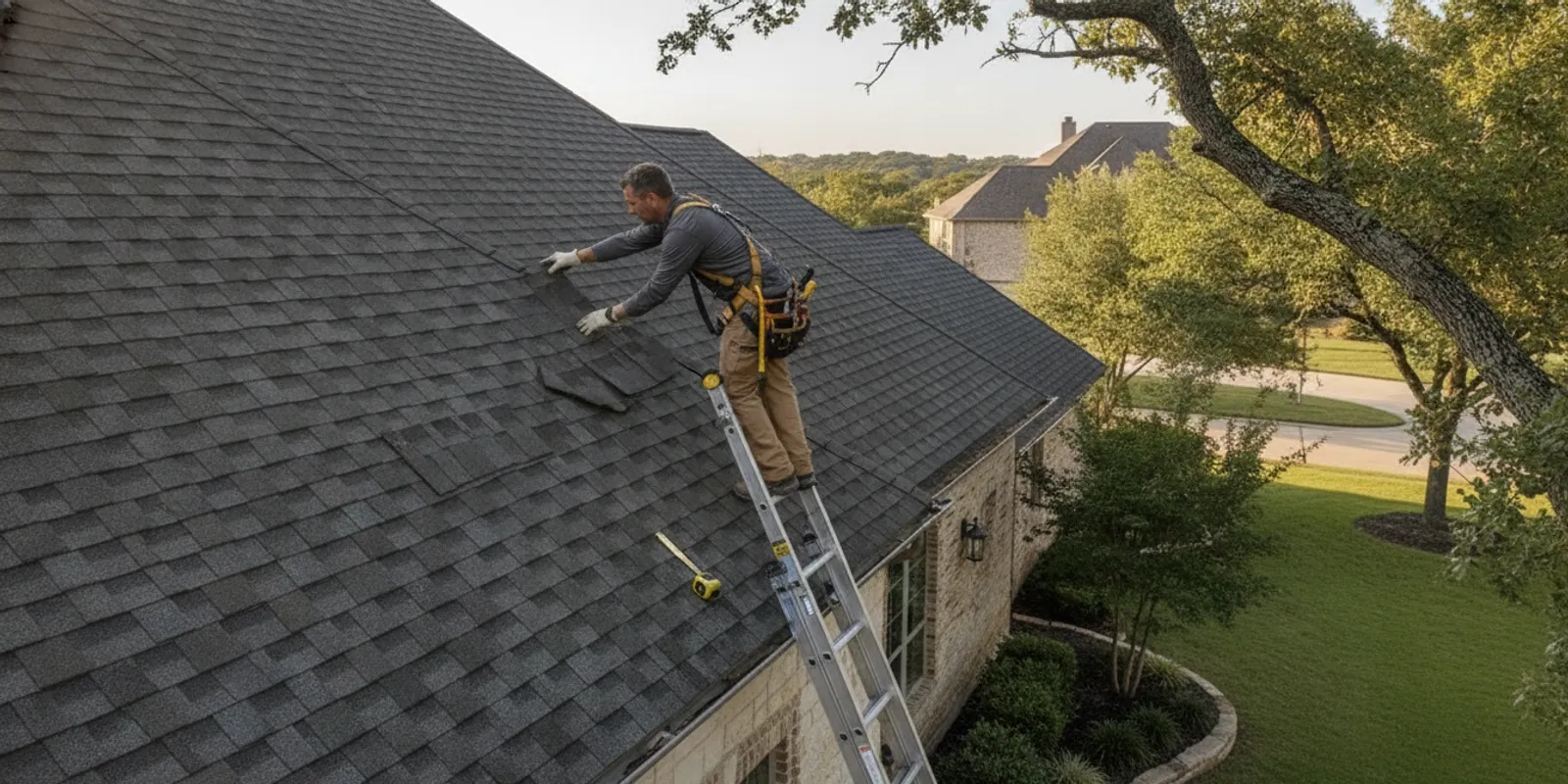
When Texas homeowners ask, “how much does roof repair cost,” the useful answer begins with the condition of the roof and the work needed—not a number detached from the property. A ceiling mark, loose shingle, or concern after a storm can each have a different cause and scope. An inspection helps connect what you have noticed with observable conditions so a contractor can discuss a project-specific proposal.
Arrange a free roof inspection
Why can’t one price answer every roof repair question?
“Roof repair” describes a broad category, not one standardized task. A repair might address a localized concern in one area, or inspection may identify related conditions across a wider section. Roof material, design, access, and the details of the proposed work all affect what should be included. Without those facts, a generic price can create a false comparison rather than help you plan.
The visible symptom also may not show the full scope. A mark on an interior ceiling is useful evidence that something deserves attention, but it does not by itself establish where water entered or which component needs work. Likewise, seeing a displaced shingle does not tell you whether nearby materials or another roof detail should be examined. A sound estimate depends on assessing the actual property and explaining the basis of the proposed work.
One Real Roofer and Construction does not publish standard roof repair prices. The company serves residential and commercial customers in Texas, including Dallas–Fort Worth, and offers free roof inspections. Its relationship-led approach connects independent sales consultants who build the customer relationship with a company that manages construction. The stated aim is a guided project experience, start to finish—not a price promise before the work is understood.
What factors shape a roof repair estimate?
A useful proposal should relate the cost to a described scope. These are common factors to discuss during an inspection; none can be reliably priced from a broad label alone.
What is the issue, and how far does it extend?
The estimate should identify the condition being addressed and the area involved, as far as it can be determined at inspection. A limited, clearly defined concern may call for different work than damage found in multiple locations. The reported symptom is a starting point for investigation, not a complete diagnosis.
For example, imagine that a homeowner finds a ceiling stain after rain. The practical first step is to record its room and location, when it appeared, and whether it has changed. The stain itself does not establish the path water took, and its size is not a measure of the roof work required. A contractor can inspect relevant roof areas and explain what evidence supports the recommended scope. If the inspection cannot confirm a hidden condition, ask how that uncertainty will be documented and handled.
How does the existing roofing system matter?
Repair details depend on the roof system already in place. One Real Roofer and Construction names asphalt shingles, metal, TPO, and modified bitumen (Modbit) among its roofing systems. Those materials are not interchangeable. Details, materials, and installation approaches appropriate for one system should not simply be assumed for another.
If you know the roof material or have records from past work, share them, while marking uncertain information as unknown. A proposal should make the relevant system clear enough for you to understand what work is being recommended. If the roof includes additions, transitions, or areas repaired at different times, mention that history rather than guessing how it affects the estimate.
How do roof layout and access affect the work?
Roof height, pitch, multiple levels, valleys, penetrations, edges, and working space around the building may affect inspection and project planning. Two roof areas of similar apparent size can involve different access and detail considerations. Do not climb onto the roof to gather information. Share what you know about gates, restricted areas, parking, equipment, and safe access from the ground.
For a business or multi-occupant property, access may also depend on operating hours, tenant schedules, deliveries, or areas that must remain usable. For a home, note household schedules and any access considerations. These details do not determine a price by themselves, but they help ensure that a discussion considers the actual conditions under which the work would be planned.
Could related or hidden conditions change the scope?
Roofing systems meet flashing, edges, drainage paths, walls, and other building components. A concern visible in one location can lead to questions about adjacent details, while an inspection may also find that a suspected problem is narrower or different than expected. A responsible conversation distinguishes observed conditions from assumptions and explains where more information may be needed.
Ask the contractor how the proposal handles conditions that cannot be confirmed before work begins. Specifically, ask what would happen if work reveals a relevant condition that was not visible during the initial inspection: how will it be recorded, who will explain it, and what approval is needed before additional work proceeds? A clear process for decisions helps you avoid treating an uncertain possibility as an agreed part of the original scope.
Does repair make sense, or is broader work under consideration?
A targeted repair may suit a limited concern. In other cases, an inspection may lead to discussion of a broader project based on the roof’s observed condition and the property owner’s needs. That decision should rest on specific findings and understandable options, not on a blanket rule that every roof should be repaired or replaced.
Ask for the reasons behind each option. What condition would the work address? What is known about the surrounding roof? What assumptions remain? Which work is included in each proposal? One Real Roofer and Construction also provides reroofing and commercial roofing services, but those are distinct scopes from a targeted repair. Its guide to considering roof repair versus replacement offers additional questions for that decision.
How does the property’s use affect coordination?
A home and a commercial property can differ in roof system, access, occupancy, and coordination needs. A commercial property owner or manager may need to consider tenants, customers, equipment, deliveries, and routine operations. A homeowner may need to identify interior areas where a symptom has appeared and coordinate household access. Explain these practical needs early so they can be considered alongside the physical scope.
One Real Roofer and Construction serves both audiences. Review the company’s residential roofing information or commercial roofing information for context about those service areas. These pages do not replace a property-specific assessment, but they can help you prepare a relevant question for the first conversation.
Why is an inspection necessary before discussing a useful price?
An inspection helps connect a reported concern with observable roof conditions and determine what work should be considered. Photos from a safe place—indoors or at ground level—can give context, but they may not show the roof details, access, or surrounding materials needed to define a scope. Do not climb onto a roof to investigate. Let the appropriate professional assess roof areas safely.
An inspection is also a chance to distinguish findings from unknowns. Ask what the contractor observed, where it was observed, and how that relates to the proposed work. If a cause cannot be confirmed, ask that the uncertainty be stated plainly. This matters because the goal is not to make every unknown disappear; it is to know what the proposal is based on and what decision might be needed if new information appears.
Before approving work, understand the written proposal. It should explain the condition or area being addressed, the work and materials included, relevant assumptions or exclusions, and how a new finding will be communicated. Ask for clarification of unfamiliar terms. A proposal is easier to assess when it describes work in practical language rather than leaving you to infer what a total includes.
One Real Roofer and Construction offers free roof inspections. That offer does not mean repair work is free, establish a particular repair recommendation, or provide a published repair price. It is a way to begin understanding the roof and discuss next steps. For a helpful overview of the process, read what a roof inspection can include.
What should you document before contacting a roofer?
You do not need to diagnose the roof. Factual observations can make the first conversation more focused and help the contractor understand what you want assessed. A short, organized record is often more useful than a confident guess about the cause.
- Where you noticed the concern: Record the room, ceiling area, building zone, or roof section if you know it. Use plain descriptions, such as “north side of the upstairs hallway,” rather than a technical label you are unsure about.
- When it began: Note when you first saw it and whether it appeared after a weather event or another known event. Timing provides context; it does not prove what caused the condition.
- What changed: Note whether the observation seems stable, recurring, or different over time. If you keep notes, include dates and separate what you saw from your interpretation.
- Safe photographs: Take clear pictures from indoors or at ground level. A wide image can show location, and a closer image can show the visible detail. Do not put yourself at risk or climb onto the roof for a better angle.
- Roof information: Gather an approximate roof age, known material, past repair records, or prior inspection documents if available. Label information you do not know instead of filling gaps with a guess.
- Property logistics: Describe access limits, gate or parking arrangements, tenant or business hours, and areas that need coordination. For commercial properties, identify any operations or equipment that may affect access.
- Your decision questions: List what you need to understand—for example, what is included, what remains uncertain, whether more than one scope is being considered, and how project updates will be handled.
Keep the record factual. A photograph of a stain establishes that the stain is visible in the photograph; it does not establish a roof leak or identify a particular component as the cause. A note that a shingle appears displaced is an observation, not a full assessment of the roof. That distinction helps the contractor investigate the concern without treating a homeowner’s understandable suspicion as a confirmed finding.
Example: prepare a useful summary without diagnosing
A homeowner might write: “I noticed a brown mark on the upstairs bedroom ceiling on October 30. It was visible after rain. I took two indoor photos that day. I do not know the roof material or whether there was previous work. Please assess the relevant roof area and explain what is included in any recommendation.” This summary gives location, timing, records, and unknowns while avoiding an unsupported conclusion about the cause.
A commercial manager might write: “A concern was reported in the storage area near the loading side. Staff first noted it on Monday. Access to that area is available before the morning delivery window; the tenant should be notified before scheduling.” The manager can add photographs taken from a safe place and relevant roof records. Again, this does not assert a diagnosis; it flags the site and coordination details that matter to the discussion.
How can you compare repair proposals fairly?
A comparison is meaningful only when you understand whether proposals address the same condition and include comparable work. Two totals can differ because their scopes, assumptions, materials, or exclusions differ. Rather than choosing by the headline figure alone, review the information each proposal provides and ask each contractor the same questions.
- Condition and location: Does the proposal identify the area or concern being addressed? Can you relate the description to what was inspected?
- Work included: Does it explain the proposed work and relevant materials clearly enough for you to understand the scope?
- Limits and assumptions: Does it state what is excluded, what was not visible, or what depends on a condition that remains uncertain?
- New findings: How will a newly discovered condition be described, documented, and presented for your decision before additional work?
- Access and preparation: Does it identify any property access, scheduling, or preparation expected from you?
- Communication: Who is your contact for questions and project updates, and how should you raise a concern?
- Written warranty terms: What written terms apply to the work, if any, and where can you review them before making a decision?
One Real Roofer and Construction states a Lifetime Labor Warranty as a company promise. Do not infer specific coverage, exclusions, transferability, or remedies from that name alone. Ask for the applicable terms in writing and read them for the project under consideration. The company’s guide to roofing warranty terms can help you identify questions to ask, but the written terms govern what applies.
For a practical comparison, place the proposals side by side and mark each item “clear,” “not stated,” or “needs explanation.” For example, if one proposal describes a roof area and materials but another only names a general repair, they are not yet easy to compare. Ask for clarification rather than assuming the broader-sounding or lower figure covers the same work. If the contractor explains that some scope depends on what becomes visible, record the process for communicating and approving that work.
What if the concern followed a storm?
After severe weather, note the date and any observable changes, and take photographs from safe locations. Avoid assuming that every roof has damage or that a particular interior symptom was caused by the storm. An inspection can help determine whether roof conditions need attention and what work, if any, is appropriate. If the concern is not visible from a safe location, do not try to inspect the roof yourself.
If an insurance claim may be involved, keep your policy information, relevant correspondence, photos, and contractor documents organized. One Real Roofer and Construction can help discuss the claim process and prepare or discuss contractor estimates. A contractor is not a public adjuster and should not negotiate a settlement or file a claim for the policyholder. For policy questions, coverage decisions, or claim procedures, contact your insurer or the Texas Department of Insurance for consumer information. Do not accept an offer to waive, rebate, or absorb a deductible.
Keep the repair-scope conversation distinct from the insurance decision. Ask the contractor to explain the observed condition and the work being estimated. Ask your insurer about policy coverage and claim requirements. These are separate questions, and a contractor estimate should not be treated as a promise about a coverage decision or settlement.
How can you understand what an estimate does—and does not—tell you?
An estimate is useful when it connects a proposed amount to a defined scope, but it is not the same as a universal price guide. It reflects the information available for a particular property and the work described in that proposal. If important conditions remain unknown, the document should make that limitation understandable instead of implying certainty that an inspection could not establish.
Look for a clear distinction between what is observed and what is proposed. An observation might describe a visible concern in a roof area; the proposal then identifies work intended to address it. If a recommendation includes adjacent details, ask why they are relevant. If the proposal excludes a related area, ask whether that exclusion matters to your concern. The point is not to challenge every line, but to understand how the work follows from the findings.
Ask how the proposal will be updated if its assumptions change. A useful answer should explain how the contractor will communicate new findings and seek your decision before additional work proceeds. This gives you a chance to understand the consequence of the change rather than feeling pressured to decide based on a vague description. Keep a copy of the proposal and any revised scope with your project notes.
When comparing more than one estimate, use the same property information and ask each provider to address the same questions. Differences can then lead to a specific conversation: perhaps the inspected area differs, the proposed materials are not described alike, or one document identifies an exclusion the other does not. Until those differences are understood, the amounts alone do not reveal which proposal is the better match for your needs.
How should you prepare for the first repair conversation?
A little preparation can help you spend the conversation on the decision you actually need to make. Begin with a short description of the concern, not a proposed repair. Say what you saw, where you saw it, and when you noticed it. Then share what information you have about the roof, such as material, approximate age, previous work, or inspection records. If an item is unknown, say so. A clear unknown is more useful than a detail presented as fact when you are not sure.
Next, explain what you want from the assessment. You might need to know whether a roof condition should be addressed, what work a contractor recommends, or how a proposed repair relates to a symptom inside the building. A commercial property manager may also need to plan around a tenant or an operating schedule. These questions help focus the discussion, but they do not predetermine what the inspection will find or what scope will be appropriate.
It can help to keep three categories in your notes: observations, documents, and questions. Observations include things you personally saw and their dates. Documents might include prior proposals, maintenance notes, or photographs. Questions identify what you still need explained. Keeping the categories separate makes it easier to avoid treating an inference as a confirmed condition and helps the contractor respond to the actual concern.
What is worth asking during the inspection?
Ask the contractor to identify the relevant areas reviewed and describe what was observable. If a concern is not confirmed, ask what remains uncertain and whether another form of assessment or additional information is needed. You can also ask how the proposed work relates to the reported symptom, whether adjacent details are included, and what is outside the proposed scope. These questions are practical whether the property is a home, a commercial building, or a construction project.
When technical terms come up, ask for a plain-language explanation and, where helpful, ask the contractor to point out the relevant location from a safe position. You should not need to climb onto a roof to follow the explanation. If a photograph or written note is used to explain a finding, keep it with the proposal so that you can refer to the same detail later.
Do not feel that every decision must be made during the first conversation. If you need to compare proposals or consult another decision-maker, ask what information you can take away and what next step is expected. A useful process gives you a chance to understand the proposed work, clarify the unknowns, and make a decision based on the information available to you.
How can you make a proposal easier to review?
Read the proposal once to understand its general recommendation, then review it again for scope details. Mark the area being addressed, work included, materials identified, exclusions, and any condition that could change the scope. If the proposal does not clearly state one of these points, write a question next to it. This avoids relying on memory or assuming that an item is included because it seems related to the repair.
For example, if the reported concern is near a roof transition, check whether the proposed work describes that transition or only a nearby roof surface. The contractor may have a reason for limiting the scope, or the document may need clarification. Ask what the inspection observed and why the recommended work is limited to that area. The example does not diagnose a particular roof; it illustrates how a specific question can expose a gap between the concern and the written scope.
Look for a clear description of how decisions are handled if the scope changes. It is reasonable to ask whether new findings will be documented and explained before work outside the original scope moves forward. Keep copies of the original proposal, revised documents, and communications about any change. Written records make it easier for everyone involved to refer to the same understanding.
Which information matters more for homes and businesses?
For a home, note where an interior symptom appears, whether anyone has observed a change, and whether there are safe photos or relevant maintenance records. If household members have different observations, record them separately with dates rather than trying to reconcile them into a single explanation. Tell the contractor about any access limits or scheduling needs, and ask what household preparation, if any, is relevant to the assessment.
For a commercial building, identify the property contact who can answer access questions, the zones affected, and any hours when inspection or work coordination would be difficult. Share relevant tenant or operations requirements before plans are made. If several people have authority over the project, clarify who should receive findings and who can approve a scope. This is project coordination information, not a substitute for reviewing the roof itself.
Construction project owners and managers can also identify the project's stage and provide available plans or prior roofing details. If the roof is part of a new build or a broader construction effort, state how the repair concern relates to other work and which decisions are still open. The purpose is to give the contractor context and avoid overlooking coordination needs; do not assume that a repair estimate includes unrelated construction tasks unless the proposal says so.
What is a useful way to handle uncertainty?
Uncertainty is common before a condition has been assessed. The useful response is to describe what is known, identify what is not known, and ask what evidence or decision could resolve the open question. For example, if you do not know the roofing material, state that. If a stain appeared after rain but you do not know whether it relates to the roof, describe the timing without asserting a cause. These careful distinctions protect the quality of the conversation.
A proposal may also contain assumptions about conditions that could not be observed. Ask the contractor to point out those assumptions and explain how a change would be raised with you. If multiple options are available, ask what each is intended to address and what findings support it. You can then consider the options against your priorities without relying on a generic industry rule or an unsupported price range.
The estimate discussion is most productive when both sides are talking about the same issue and the same work. You provide accurate observations and property context; the contractor explains the inspection findings and proposed scope. If either side discovers that the information is incomplete, pause to clarify rather than treating an assumption as settled. That simple discipline makes the written proposal more useful for planning and comparison.
What details make a repair estimate easier to use?
A useful estimate is more than a total. It should let you trace the recommendation from the observed concern to the work proposed, and show where the contractor’s understanding depends on an assumption. If the document uses a short label, ask what that label means for your roof. The goal is not to demand unnecessary technical language; it is to make sure you understand what you are being asked to approve.
Start with the location. A proposal that identifies a roof area or relevant detail is easier to compare with the inspection discussion than one that refers only to “repair.” If several locations are involved, ask whether the proposed work covers all of them or only a portion. If the proposal addresses a symptom rather than a confirmed cause, ask how that distinction is represented and what the recommended work is expected to address.
Next, look at the described work and material. The proposal should provide enough detail for you to understand the general scope and how it relates to the existing roofing system. If a material or method is not familiar, ask what role it has in the project. Do not assume that similar words in two different proposals mean the same work. Ask each contractor to explain the proposed scope in terms that you can compare.
Then review the boundaries. What is explicitly included? What is excluded? Does the estimate rely on a condition that has not been confirmed? If an adjacent component is not included, ask whether it was inspected and why it is outside the proposed scope. A clear boundary helps you understand both what the proposal addresses and what it leaves for a separate decision.
Finally, check how changes and communication are described. Ask who will contact you if a new condition is observed, what information you will receive, and how your approval will be recorded before work beyond the agreed scope is considered. Ask who is your point of contact for questions. These are ordinary project questions; an estimate should not require you to guess how a significant change will be handled.
How might two estimates differ even when the concern sounds the same?
Consider a property owner who reports a recurring ceiling mark and receives two proposals. One proposal describes a specific roof area and a repair to named components, with a note that an adjacent area is excluded. The other describes a broader area but does not explain how the work relates to the interior mark. There may be a sound reason for either scope, but the owner cannot compare the recommendations from the descriptions alone.
The next step is to ask both contractors to explain what they observed, which location they assessed, and why the proposed work differs. The owner can then ask whether each proposal includes the same relevant materials and whether either scope depends on additional conditions being found. This is not a request to force identical recommendations. It is a way to understand the basis for each one and determine whether the estimates address the same concern.
If a contractor says that a condition cannot be confirmed until work begins, ask what the proposal assumes and how the contractor will communicate if the assumption proves inaccurate. The owner should understand whether a separate decision may be required and what information will be provided before that decision. A written answer helps distinguish an agreed scope from a possible later change.
This example does not assign a cause to a ceiling mark or establish which contractor is right. It shows why scope detail matters: matching totals or broad labels do not guarantee matching work. For any proposal, evaluate the inspection explanation, defined work, materials, boundaries, and process for new findings together. That gives you a better basis for a decision than comparing an isolated number.
How can Texas property owners take the next step?
Start with the basics: what you noticed, where it is, when it began, and what access or scheduling needs apply. Gather safe photographs and records if available, but do not delay a conversation while trying to diagnose the roof. Ask for an inspection and a written explanation of observed conditions, recommended work, assumptions, and next steps.
One Real Roofer and Construction serves residential and commercial customers in Texas, including Dallas–Fort Worth. Its relationship-led model pairs independent sales consultants who build customer relationships with company-managed construction. If you are in the stated Texas service region, you can share the property location and project needs to confirm whether they can be discussed. The services overview provides additional context about the company’s roofing and construction work.
Before approving a proposal, make sure you can explain in your own words what the work addresses, what the price includes, and what remains uncertain. If you cannot, ask for a plain-language explanation or a written clarification. That small step can make a large difference in how confidently you compare the proposal and decide what to do next.
Discuss your roof repair concern
Frequently asked questions
Can I get a roof repair price from a photo?
A photo can show visible context, but it may not reveal the roof system, full condition, access, or work required. Share safe photos as background, then ask for an inspection and a scope based on the property.
Does a free inspection mean the repair is free?
No. One Real Roofer and Construction offers free roof inspections; that does not mean repair work is free or that a particular repair will be recommended. Ask for a written, project-specific proposal before deciding.
Should I repair a roof or replace it?
That depends on the observed condition and extent of the issue, the roof system, and the property owner’s needs. Ask the contractor to explain the findings and why a targeted repair or broader scope is under consideration.
What should a roof repair proposal tell me?
It should describe the condition and area being addressed, work and materials included, relevant assumptions or exclusions, and how additional findings will be communicated and approved. Ask for clarification about any part you cannot interpret.
Does One Real Roofer and Construction publish standard repair prices?
No standard roof repair prices are provided here. The property and scope need to be understood before a project-specific proposal can be meaningfully discussed.
A careful inspection, factual project notes, and a clearly defined scope give you a sounder basis for discussing roof repair than a generic price estimate.