
Roof Flashing Repair Cost and When Flashing Fails
Learn what affects roof flashing repair cost, how to spot likely failure, what a contractor should check, and when repair or replacement may make sense.
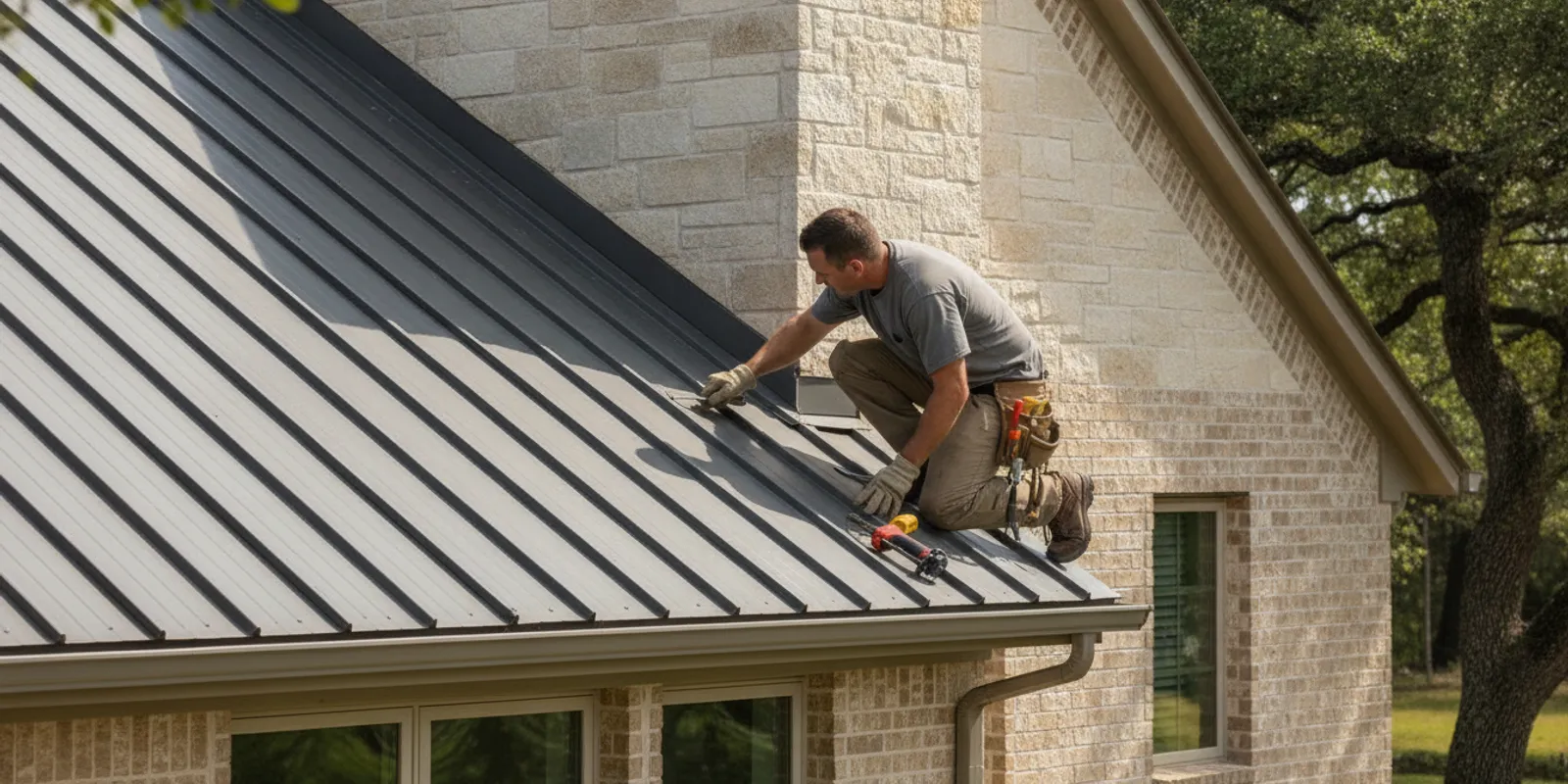
Roof flashing repair cost depends less on one universal price and more on where the flashing sits, how much material is affected, and whether the surrounding roof or wall assembly is sound. If you are trying to decide what to do after a leak or visible damage, start by identifying the location and asking for a written explanation of the proposed work. This guide covers roof flashing repair cost, common failure clues, and the questions that help Texas property owners compare repair options.
Request a roofing conversation
Why does roof flashing repair cost vary?
Flashing is used at joints and transitions where water could otherwise get behind roofing or siding. A small, accessible section may need a different scope from flashing that is tucked beneath shingles, runs along a wall, or is integrated with a larger roof assembly. The visible metal is only one part of the decision. A contractor may also need to inspect the adjacent roof covering, fasteners, sealant, underlayment, trim, or wall surface to understand why water is getting through.
That is why a useful estimate describes the location, the suspected failure, and the work needed to correct it. A single number without a defined scope cannot tell you whether the proposal covers a limited repair, replacement of a longer flashing run, or related repairs to materials around it. Ask what is included before comparing amounts.
For more background on the role and locations of flashing, see this overview of roof flashing and leak clues. The purpose here is different: to help you understand what can drive a repair scope and what to ask before authorizing work.
What parts of the work affect the estimate?
These are the main factors a property owner can ask a roofer to explain. Not every job involves all of them, and the presence of one factor does not automatically mean a large repair is necessary.
- Location and access. Flashing at a roof edge may be easier to reach than a transition that runs behind a wall covering or sits near a complex roof intersection. The estimate should identify the location and explain any access or setup needs that affect the work.
- Extent of the affected area. A localized opening, a loose section, and a long deteriorated run are different scopes. Ask whether the proposal addresses only a visible spot or the full length of flashing that appears compromised.
- Roof covering removal and replacement. Some flashing is installed beneath shingles or another roof covering. Reaching it may require carefully lifting or removing nearby material and then restoring the affected area. Clarify what the work includes and whether replacement materials will match the existing assembly as closely as practical.
- Condition of adjacent materials. Water may have affected nearby sheathing, trim, siding, underlayment, or interior finishes. Those conditions should be documented and separated from the initial flashing scope when they are not yet confirmed.
- Flashing type and transition details. Chimneys, walls, valleys, skylights, roof edges, and plumbing penetrations have different configurations. The contractor should identify the transition involved rather than describe everything simply as “the flashing.”
- Material and installation method. The type of metal or other flashing material, its dimensions, how it is joined, and how it ties into adjacent layers all affect the repair plan. Ask what material is proposed and why it suits the existing roof and location.
- Roof condition and project timing. If the surrounding roof covering is near the end of its useful service life or already needs broader work, a small flashing repair may be considered alongside that work. This is a planning question, not proof that a full replacement is needed.
- Scope of cleanup and closeout. A complete proposal should state how the work area will be protected, what debris will be removed, and what the contractor will review before considering the repair complete.
Use these points to understand the estimate, not to diagnose a roof from the ground. If you want to understand inspection scope first, review what a roof inspection can include. Ask whether the assessment is limited to the flashing location or also looks at related roof surfaces and the interior area where a leak appeared.
Which flashing locations commonly need attention?
Water entry near a roof joint does not by itself identify the failed component. The leak may appear some distance from the opening because water can travel along roof layers or framing before showing indoors. The areas below are useful to mention when requesting an assessment.
Where a roof meets a wall
Roof-to-wall transitions may use step flashing, counterflashing, or related details, depending on the construction. Look from a safe place for lifted, missing, bent, or visibly separated material, but do not pull siding or roofing apart to investigate. A contractor should explain how the flashing ties into both roof covering and wall finish, and whether the proposed repair addresses the whole transition or only an exposed section.
At chimneys and other masonry features
A chimney transition can involve flashing at the roof plane and material integrated with the masonry. Cracked sealant, gaps, corrosion, or loose pieces are reasons to ask for a closer review, but surface sealant alone may not explain the full condition. Ask the roofer to state whether the work is limited to flashing, includes related masonry details, or depends on a separate trade or repair.
Around roof penetrations
Vents, pipes, and other penetrations rely on flashing details that fit the opening and roof covering. A displaced boot, damaged collar, or gap around the penetration may be visible from a safe vantage point. The estimate should identify the specific penetration and indicate whether the flashing component will be repaired, replaced, or resealed as part of a larger detail.
At valleys, edges, and roof intersections
Valleys and roof edges collect or direct water as part of the roof drainage path. Intersections between roof planes can have layered details that are not obvious from below. If water stains or exterior damage appear nearby, tell the inspector when they began and whether they change after rain. That history helps focus the assessment, though it is not a substitute for examining the roof assembly.
When might flashing be failing?
Flashing may need attention when it is visibly missing, loose, bent, corroded, separated from an adjoining surface, or no longer integrated with the roof covering. Interior clues can include a recurring stain near an exterior wall, chimney, ceiling transition, or roof penetration. Peeling paint, dampness, or deterioration near a roof line may also warrant investigation. These clues do not prove that flashing is the source. Roof coverings, drainage paths, plumbing, condensation, and other building conditions can create symptoms in similar places.
Look for patterns and record them. Note the room and approximate location, the date you first noticed the issue, whether the mark changes after rain, and whether it has grown. Take photographs of interior staining and exterior conditions only from a safe position. Do not climb onto a wet or steep roof, remove roof parts, or apply a patch that could hide the condition before it is assessed.
After a storm, visible displacement or a new interior stain deserves timely attention, but avoid assuming that all damage is from the most recent weather event. A focused storm-damage roof review can help document what is observed and distinguish apparent damage from items that need further investigation. A professional assessment should explain observed conditions and limits rather than promise a particular outcome before the roof is examined.
How can you tell whether a repair or broader work is being proposed?
A repair is generally a defined effort to correct a localized condition while retaining the surrounding assembly. Broader work may be proposed when the affected flashing extends across a longer area, multiple connected components are compromised, or the roof covering around the detail cannot be restored as part of a small repair. These descriptions are not a diagnosis. The right scope depends on the conditions found on the property.
Ask the contractor to show, in words or photos, what is damaged and where. Then ask what portion will be removed, what will be replaced, and how the repaired area connects to sound existing materials. If the recommendation is for more than a limited repair, ask which specific observations support the wider scope and what uncertainties remain. An estimate should not rely on a vague statement such as “the roof is bad” without explaining the relevant evidence.
If you are also weighing a larger roof decision, this guide to roof repair versus replacement can help organize the questions. It does not replace an inspection of the particular flashing detail. A repair-versus-replacement decision should consider the condition of the overall roof, not one leak clue in isolation.
What should a flashing estimate include?
Request a written scope that makes the work understandable to someone who was not on the roof. A clear proposal can help you compare like with like and avoid assuming that two estimates describe the same job.
- Location: identify the roof area and the flashing transition involved.
- Observed condition: describe what is visibly damaged or disconnected, and distinguish confirmed conditions from items that may be found after opening the assembly.
- Work steps: state what will be lifted, removed, repaired, replaced, and reinstalled.
- Materials: identify the type of flashing and related materials planned, including any limits on matching existing finishes.
- Adjacent repairs: explain whether roof covering, underlayment, trim, sheathing, or interior finishes are included, excluded, or subject to approval if additional conditions are discovered.
- Protection and cleanup: describe how the area will be protected during work and what cleanup is included.
- Changes and approvals: clarify how the contractor will communicate any added work and obtain approval before proceeding.
- Schedule and access: state the expected work window and any access arrangements the property owner needs to make.
- Closeout: explain what review, documentation, or completion information the customer will receive.
These details matter for both small and larger projects. If concealed damage may be present, ask how that possibility will be handled. A proposal can identify a base scope and a process for discussing additional work without pretending that hidden conditions are already known.
How do you compare repair options fairly?
Compare the scope, not just the bottom line. One proposal may cover a short section while another replaces a longer run and restores more of the adjacent roof covering. A lower amount is not necessarily a better value if it leaves a known transition unresolved; a larger amount is not automatically justified simply because it includes more work. Ask each provider to explain the condition and describe the repair boundary.
| Option described | What to confirm | What the description does not prove |
|---|---|---|
| Localized flashing repair | Exact location, affected length, materials, and how nearby roof covering will be restored. | That all related flashing or concealed damage is included. |
| Replacement of a longer flashing run | Why the larger area is included and how its ends connect to existing details. | That a full roof replacement is necessary. |
| Flashing plus adjacent roof repair | Which additional materials are included and what could change if hidden damage is found. | That every interior stain or leak source will be addressed. |
| Flashing as part of broader roof work | How the flashing scope fits the wider project and which items are separate. | That the broader project is required without documented roof conditions. |
For each estimate, write down the same questions and compare the answers side by side. Ask whether the work is intended to correct the observed entry point or also address nearby components. If the provider cannot confirm the full condition until materials are opened, ask how you will review photos or findings and approve any change. A clear process is more useful than treating an uncertain scope as a guaranteed fixed outcome.
You can also review the National Roofing Contractors Association for general roofing information and contractor resources. Use any external resource as background, then ask the provider to explain how the proposed work applies to your own roof and local conditions.
How can you prepare to compare estimates?
Before requesting proposals, make a short record of the concern. Note the roof area or room where the leak appears, when you first noticed it, whether the condition is active, and whether it has occurred before. If more than one area is affected, list each one separately. This helps a provider understand what you are asking them to inspect and makes it easier to spot when estimates cover different locations.
When each estimate arrives, mark the location and scope in plain language. For example, note whether it covers one pipe penetration, an entire wall transition, or flashing and adjacent shingles. Then compare which materials will be removed, which will be reused, and how the repaired area will be closed back up. If a proposal uses a broad label such as “roof repair,” ask what that means for the specific flashing detail.
Also separate confirmed work from possible work. An estimate may include a defined repair while stating that concealed damage cannot be evaluated until the roof covering is lifted. That is not the same as confirming hidden damage exists. Ask whether additional work requires a separate price and your approval, and how the findings will be shared. If one estimate includes a contingency and another does not, ask both providers to clarify what happens if the same condition is uncovered.
Do not compare proposals on the assumption that each has identical access, material, or restoration needs. If amounts differ, ask for the specific scope difference that explains the variation. You can also ask each provider to identify exclusions, such as interior finish repair or work on a separate roof area. A written answer may reveal that one scope is narrower, broader, or simply more specific than another.
Keep a copy of photographs, proposals, and communications together. If the issue returns after work, those records can help you explain the location and the work already performed. This is especially helpful when a property has several similar roof transitions or when repairs are planned in stages. Organized notes do not establish the technical cause, but they can make the assessment and scope discussion more precise.
How should you think about timing and urgency?
Timing depends on the condition and whether water is actively entering. A small stain that has not changed is still worth investigating, but active dripping, spreading dampness, or water near electrical equipment calls for more immediate attention and safe handling. Tell the provider what you are observing rather than labeling the issue as a particular flashing failure.
Do not wait for a convenient dry day if water is entering the building and creating an immediate safety concern. Keep people clear of unsafe areas and seek appropriate help. At the same time, avoid risky temporary roof work. A hurried patch applied over wet or damaged materials can conceal the actual condition or create a new issue. If temporary protection is discussed, ask who will perform it, what it is expected to do, and what permanent assessment or work remains afterward.
When planning non-emergency work, ask how weather and roof access may affect the schedule. The contractor can explain what conditions are needed to perform the proposed work and how a delay will be communicated. For an occupied home or business, clarify any areas that need to remain clear and who will coordinate access. These questions do not change the underlying repair scope, but they help set practical expectations for carrying it out.
What is different about a commercial flashing assessment?
Commercial buildings can have larger or more varied roof areas, equipment penetrations, parapets, wall transitions, and operating constraints. The estimate should identify the specific building area, access requirements, affected system, and any coordination needed with tenants, staff, or site operations. Ask whether the inspection covers one reported location or a broader roof review, and have the scope state what was not inspected.
For an active property, include practical issues in the conversation: who can provide roof access, whether work areas need to be isolated, how the contractor will communicate if operations are affected, and who can approve a changed scope. A proposal that groups several locations under one general line may be hard to evaluate. Ask for each roof area and flashing condition to be described separately enough that you can track the work.
If the building has multiple roof sections or a larger project context, the commercial roofing service information may help you frame a conversation about the relevant property needs. It is still important to define the particular flashing issue and requested assessment rather than assume a general service description covers a specific repair.
What should Texas property owners do after a leak appears?
Start with safety and documentation. Keep people away from an area where water is actively entering near electrical equipment or where a ceiling appears unstable. If it is safe to do so, move belongings, place a container to catch dripping water, and document the interior condition. Do not go onto the roof to investigate during rain, high winds, or unsafe access conditions.
When contacting a roofing provider, share the leak location, when it began, whether it has happened before, and any visible exterior clues. Ask for an assessment that identifies the likely entry point and explains what was inspected. If the source cannot be confirmed without opening materials, ask how the next step will be discussed before added work begins.
For homeowners, the residential roofing information provides a path to discuss a roof concern. For broader project questions, review the company's roofing and construction services. Neither a stain nor a general service description establishes the repair needed; the condition on site does.
What should you expect from the first conversation?
A useful first conversation should help determine what information is available and what assessment is appropriate. Be ready to explain whether the property is residential or commercial, where the concern appears, and whether there is active water entry. If you have photographs, share those rather than attempting to reach a difficult roof location. Ask what the next step includes and whether the review will be limited to the flashing or consider nearby roof conditions.
One Real Roofing and Construction describes roofing and construction support for residential and commercial customers in Texas, including Dallas–Fort Worth, and presents a relationship-led project experience. The available information does not establish one standard repair price or a guaranteed result for every flashing issue. An on-site assessment and a clearly defined scope are the basis for discussing the specific work.
Discuss a roof flashing concern
Frequently asked questions
Can a roofer quote flashing repair cost from a photograph?
A photograph may help identify the location and visible clues, but it cannot always show how flashing connects beneath the roof covering or whether nearby materials are affected. Ask whether a photo-based estimate is preliminary and what an on-site review may change.
Does a leak near a wall mean wall flashing has failed?
Not necessarily. Water can travel before appearing indoors, and other roof or building conditions can create similar stains. A contractor should inspect the relevant transition and explain the evidence supporting the proposed source.
Should damaged flashing always be replaced?
Not automatically. The appropriate work depends on the observed condition, the detail involved, and whether surrounding materials can be restored. Ask the contractor to explain why the proposed repair or replacement is the right scope for the condition found.
What if additional damage is found after work begins?
Ask for the process in advance. The contractor should explain how newly visible conditions will be documented, what added work is proposed, and how approval will be obtained before the scope changes.
Is flashing repair the same as fixing an interior water stain?
No. Repairing a roof entry point and restoring an interior finish are separate tasks unless the written scope specifically includes both. Confirm whether the estimate covers exterior roofing work only or also interior repairs.
What is the practical next step?
Record where the leak or visible damage appears, avoid unsafe roof access, and request an assessment that identifies the flashing location and the surrounding conditions. Compare written scopes by the work included, materials, repair boundaries, and process for concealed damage, rather than relying on a number without context. That gives you a clearer basis for deciding what work to authorize.